Minecraft Beehive Guide: Crafting, Honey Levels and Sting-Free Harvests
Crafted hives versus natural nests, the three-bee limit, reading honey level five, campfire smoke and dispenser harvesting, and moving a colony safely.
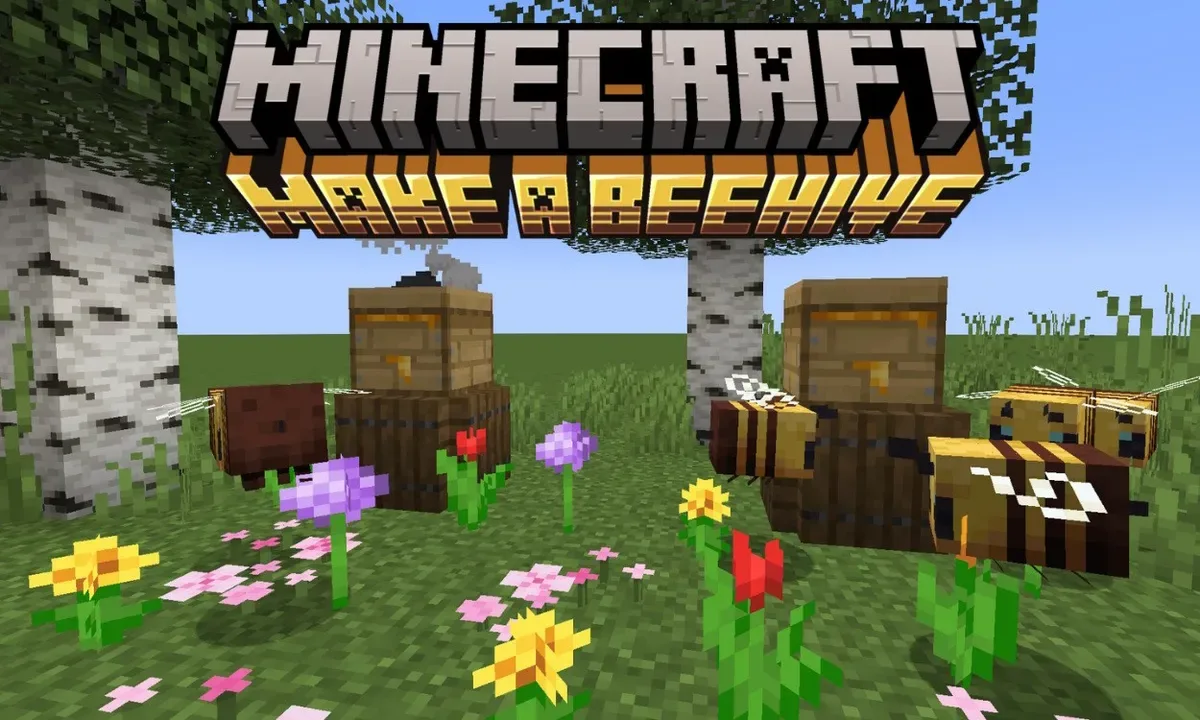
Crafted hives versus natural nests, the three-bee limit, reading honey level five, campfire smoke and dispenser harvesting, and moving a colony safely.
A beehive is the home you build for your bees: six planks and three honeycomb in a crafting table, and in exchange you get a compact, movable honey factory that works anywhere you plant flowers. Its wild sibling, the bee nest, spawns naturally in trees and works exactly the same way once you find one. Understanding the shared rules — three bees to a home, honey that fills in five stages, and one non-negotiable campfire — turns beekeeping from a sting-filled gamble into the calmest farm in Minecraft.
What is the difference between a beehive and a bee nest?
Mechanically, almost nothing. Both house up to three bees, both fill with honey in the same five stages, and both are harvested the same way. The differences are practical. Nests generate hanging from oak and birch trees in flower-rich biomes, and they belong to the terrain: breaking one without silk touch destroys it and angers the residents. Hives are yours. You craft them, place them where you like — over a flower field, beside your crops, inside a greenhouse — and a spare hive next to a full nest is also how you expand a bee population, giving the offspring somewhere to live. Most beekeepers find a nest, then graduate to crafted hives immediately.
How do you craft a beehive?
The recipe is six wooden planks filling the top and bottom rows of the crafting grid, with three honeycomb across the middle. Any plank type works and can be mixed. Yes, this means you need honeycomb before you can build your first hive, which means one careful trip to a natural nest with shears — and a campfire, for reasons that become obvious the first time you skip it. After that first harvest, honeycomb supply snowballs: every full hive you shear pays for the next hive's materials several times over.
How can you tell a hive is full?
Honey fills in five levels as bees return with nectar and complete their work inside. The block tells you where it stands: as levels rise, honey starts to show on the hive's face, and at level five — full — honey visibly drips from it and the front takes on its glistening, ready look. Only harvest at five. Shearing or bottling a hive early resets the level to zero for a fraction of the yield, the beekeeping equivalent of picking fruit green.
How do you harvest without being stung?
Smoke. Light a campfire directly beneath the hive, or a few blocks below it so the smoke drifts up through the block, and the bees stay calm while you work: shears take three honeycomb, a glass bottle takes a honey bottle. Skip the campfire and the colony pours out angry; a bee that lands its sting dies shortly after, so a careless harvest can wipe out your own workforce. A dispenser aimed at the hive does the same job hands-free — loaded with shears it clips honeycomb, with empty bottles it draws honey — and because no player does the harvesting, the bees never get angry at all, campfire or not.
When are the bees home, and how do you move a hive?
Bees work the flowers by day, head home as dusk falls, and shelter inside through the night and whenever it rains. That schedule is your moving window. A crafted hive with bees inside should be broken with a silk touch tool if you want the colony to travel with the block — without silk touch the block is lost and the bees come out furious, exactly as with a natural nest. The gentle method most keepers use: wait for full darkness or rain so everyone is indoors, silk-touch the hive, carry it to the new flower patch, place it, and walk away before morning. Bees moved only a short distance settle straight back into their routine.
Where should you place hives for the best output?
Surround them with flowers. Bees need blossoms within a short flight to gather nectar, and every trip out and back moves the honey level along, so a hive in a bare yard fills painfully slowly while one sitting in a flower field cycles steadily. Place hives raised on fences or posts so campfire smoke can rise underneath without the fire blocking your access, keep them near crops if you want the pollination bonus — bees dripping nectar over your fields speed the plants along — and give each new hive a little distance from its neighbours. Calm bees, full combs, no stings: that is the whole craft.
Frequently Asked Questions
How many bees can live in one beehive?
Three. A hive or nest holds a maximum of three bees, so a growing colony needs extra hives placed nearby or the new bees have nowhere to sleep and will wander off looking for a home.
How do you get honey without angering the bees?
Put a lit campfire beneath the hive so its smoke rises through the block; smoked bees stay calm while you use shears for honeycomb or a glass bottle for honey. A dispenser with shears or bottles also harvests sting-free, with or without smoke.
Can you move a beehive with the bees inside?
Yes — wait until night or rain when all the bees are home, then break it with a silk touch tool so the colony travels inside the block. Without silk touch the hive is destroyed and the bees emerge angry.
Why is my hive not filling with honey?
Usually a flower problem. Bees need blossoms within a short flight of home, and each nectar trip only advances the honey level slightly. Plant a dense flower patch around the hive and harvest only at level five, when honey visibly drips.