Blast Protection in Minecraft: Armour for Things That Go Boom
Blast Protection reduces explosion damage and knockback from creepers, TNT, beds and End crystals. Find out where it fits, why it clashes with regular Protection, and when it earns its place.
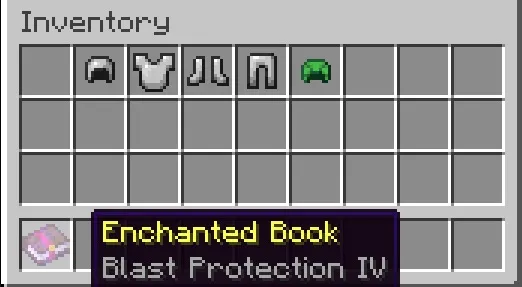
Blast Protection reduces explosion damage and knockback from creepers, TNT, beds and End crystals. Find out where it fits, why it clashes with regular Protection, and when it earns its place.
Blast Protection is the armour enchantment that cuts down damage from explosions, whether that blast comes from a creeper, a bed in the Nether or a block of TNT. Along with the reduced damage, it also softens the knockback that would otherwise send you flying, which can matter as much as the health it saves.
What exactly does Blast Protection protect you from?
Anything that goes boom. Creeper detonations, ghast fireballs, TNT, end crystals, charged creepers and the deliberate explosion of a bed or respawn anchor in the wrong dimension all count as blast damage. Each level of the enchantment, from Blast Protection I up to the maximum of IV, trims a further share off that incoming damage and off the shove that comes with it. That knockback reduction is easy to overlook until you have been launched off a Nether fortress walkway into lava by a fireball you survived comfortably — the health bar said fine, the landing said otherwise.
Which armour pieces can carry Blast Protection?
All four of them: helmet, chestplate, leggings and boots can each hold the enchantment. Because protection from a damage type is tallied across everything you are wearing, spreading Blast Protection across several pieces adds up to a much tougher whole than a single piece working alone. Plenty of players keep a dedicated blasting set — a couple of pieces enchanted specifically for explosive work — rather than trying to make one suit of armour answer every threat in the game.
Why won't Blast Protection combine with regular Protection?
The four protection enchantments form a family that refuses to mix: Protection, Fire Protection, Blast Protection and Projectile Protection cannot be placed on the same piece of armour. An anvil will simply decline to merge them. The reasoning is balance — general Protection already reduces explosion damage to a degree, so allowing the specialist on top would make players nearly immune to whole categories of harm. You are therefore choosing a specialisation per piece. Full general Protection is the safer all-round wardrobe, while Blast Protection is the deliberate pick for jobs where explosions are the main event rather than an occasional surprise.
When is Blast Protection genuinely the right choice?
- Wither fights, where explosive skulls and the wither's destructive habits dominate the battle
- End crystal duty during a dragon fight, especially if you climb the obsidian pillars
- TNT mining and netherite hunting with beds in the Nether, where one mistimed blast is the whole risk
- Creeper-heavy areas and hardcore worlds, where a point-blank detonation is a run-ending event
- Any base built around redstone contraptions that occasionally go wrong in a loud way
Outside those situations, general Protection usually serves you better day to day, because it helps against everything a little rather than one thing a lot.
Can you mix different protection types across one outfit?
Yes — and it is a smarter approach than many players realise. The incompatibility rule applies within a single piece of armour, not across your whole outfit, so nothing stops you wearing a Blast Protection chestplate alongside leggings carrying ordinary Protection and boots carrying Fire Protection. The defensive effects from everything you wear are counted together, which means a mixed wardrobe covers several threats reasonably instead of one threat superbly. A popular compromise is two pieces of general Protection and two pieces specialised for whatever your current project involves — swapping the blast pieces in for a Nether expedition or a Wither arena, and swapping back for everyday exploring. It asks for a bit of armour-stand organisation at home, but it is the closest thing the game offers to a loadout system, and it makes Blast Protection useful far more often than an all-or-nothing set would.
How do you get high-level Blast Protection?
The enchanting table offers it on armour regularly, and the top levels often come from combining two matching pieces or books on an anvil — two Blast Protection III books make IV, at the cost of some experience levels. Librarian villagers can stock the book, and it turns up in loot often enough that patient explorers accumulate spares. When building a blasting set, put the highest levels on the chestplate and leggings if you have to choose, simply because those are the pieces you are least likely to swap out for utility gear like elytra or a turtle shell helmet mid-job.
Frequently Asked Questions
What is the maximum level of Blast Protection?
Blast Protection goes up to level IV, and it can be placed on a helmet, chestplate, leggings or boots. Its effect stacks across the pieces you are wearing.
Can Blast Protection go on the same armour as Protection?
No. Blast Protection is incompatible with Protection, Fire Protection and Projectile Protection on the same piece, so each piece of armour specialises in one protection type.
Does Blast Protection help against creepers?
Yes. Creeper detonations count as explosion damage, so Blast Protection reduces both the health lost and the knockback from a creeper blowing up next to you.
Is Blast Protection better than regular Protection?
Only against explosions. For everyday play, general Protection is usually the better all-rounder, while Blast Protection is the specialist choice for Wither fights, End crystals and TNT or bed mining.