Minecraft Boat Guide: Crafting, Passengers, Chest Boats and Ice Roads
A boat is cheap transport, a two-seat mob ferry, a chest-carrying hauler and the star of Minecraft’s ice highways. Learn the recipe differences and the tricks that make it so useful.
A boat is cheap transport, a two-seat mob ferry, a chest-carrying hauler and the star of Minecraft’s ice highways. Learn the recipe differences and the tricks that make it so useful.
Five matching planks make one of Minecraft's most useful early vehicles. A boat crosses oceans without draining hunger, carries a second passenger or a mob, protects the rider from fall damage when it lands intact, and becomes absurdly quick on ice. Java players craft it from planks alone in the current recipe. Bedrock's recipe has traditionally also included a wooden shovel, an edition difference worth checking before you blame the crafting grid.
How do you make and place a boat?
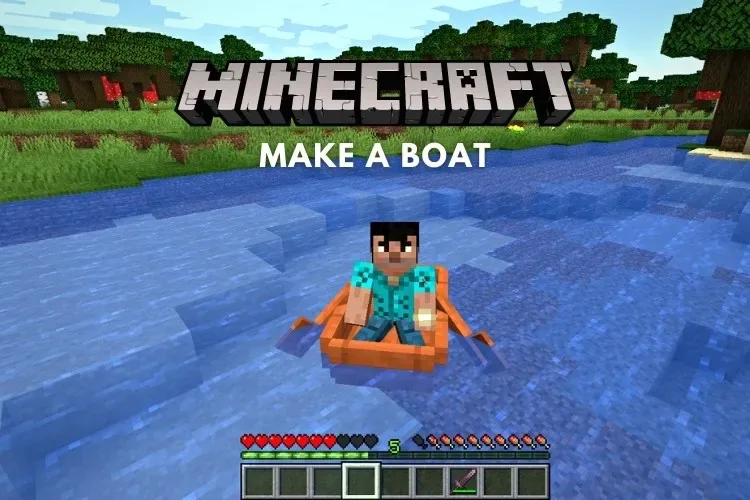
Use five planks of the same wood type arranged as a shallow U in a crafting table. The finished boat's appearance follows the wood. Right-click suitable water to place it, then interact with it to climb in. Steer with your normal movement controls and look where you want to travel; the boat turns with a loose, drifting feel that becomes natural after a few collisions.
Place a spare boat before a long crossing. Boats can be pushed by currents, stranded on banks or left behind after an awkward dismount. Breaking an ordinary boat returns the boat item, while a boat carrying passengers or cargo needs more care. Do not attack the side in a panic while your tamed wolf, villager or friend occupies the other seat.
On land, a boat moves poorly but can still be useful as a trap or a slow improvised vehicle. Its real home is open water, a prepared canal or a polished ice road.
Why are boats so fast on ice?
Ice gives a boat very little friction. On a straight course of ice, packed ice or blue ice, it can accelerate far beyond ordinary rowing speed and cover enormous distances quickly. Players build ice highways through the Nether or Overworld, often with a flat floor, guarded sides and stations where the boat can be stopped safely.
The same lack of grip makes corners lively. Approach turns early, keep the centre of the lane open and avoid buttons, signs or decorative blocks jutting into the track. Blue ice is prized for the fastest routes, but any long journey benefits from a clean surface and a roof or walls where hostile mobs might wander in.
An ice road is infrastructure, not merely a stunt. It can turn a distant woodland mansion, ocean monument or second base into a routine trip, especially when paired with maps and labelled exits.
Who or what can ride with you?
A standard boat has two seats. The player who enters first takes control, and another player or a suitable mob can occupy the second seat. This makes boats a practical way to move villagers, animals and other transportable mobs across water without building a bridge for every journey.
Leads add flexibility when moving animals around a dock or loading area. Newer boat-and-lead behaviour also allows certain leashed arrangements in current versions of the game, but treat the exact interaction as an aid rather than the main transport plan. The dependable method remains simple: guide the mob into the empty seat, check that it is actually seated, then push off. A passenger that follows on a lead beside a fast boat can snag on banks and break free.
At the destination, make a small enclosed landing before anyone gets out. Villagers in particular have a talent for stepping from a successful thousand-block voyage directly towards a ravine, a zombie or the one unlit corner of the dock.
When should you use a chest boat?
Combine a boat with a chest to create floating storage. It is excellent for gathering sand, gravel, prismarine, coral materials or loot from scattered islands, because the vehicle and the cargo space travel together. The chest replaces the second passenger seat, so it is a hauler rather than a ferry.
Label the workflow before you leave: empty boat out, full boat home, dock beside storage. Breaking a chest boat needs caution because its contents must be handled correctly. Empty it into your inventory or a placed chest when possible rather than smashing it on a crowded shore and watching important items scatter into deep water.
Can a boat save you from a fall?
A boat can negate fall damage for its rider when it lands as a boat rather than breaking apart or hitting an unsafe edge. Players use this in drops, emergency escapes and deliberate stunts, but it is a technique to practise over water or in a safe test area first. A late mount, a clipped block or an accidental dismount can turn confidence into a respawn screen.
Boats also protect against some of the ordinary awkwardness of travel. You do not swim slowly through every bay, drown while reading a map or spend the journey fighting the surface. Keep food for the walking parts, a weapon for the landings and a spare boat in your inventory. For such a cheap recipe, it remains one of the best returns in the game.
Frequently Asked Questions
Do you need a shovel to craft a boat?
Java’s current boat recipe uses five matching planks. Bedrock’s recipe has traditionally required a wooden shovel as well, so check the recipe book for the edition you are playing.
Why do players build boat roads from ice?
Ice has very low friction, letting boats travel much faster than they do on open water. Packed routes with clear lanes and safe stops become practical long-distance highways.
Can a boat carry a villager or animal?
Yes. A normal boat has two seats, so a player can steer while a second player or a suitable mob rides as passenger. Build an enclosed landing so the passenger cannot wander off at the destination.
What is a chest boat used for?
A chest boat swaps the passenger seat for storage, making it useful for hauling gathered blocks and loot across water. Empty it carefully before breaking it so the contents are not scattered.