Minecraft Cake: Recipe, Slices and the Comparator Trick
Cake in Minecraft is a placeable food eaten slice by slice, a multiplayer party piece and even a readable redstone signal. Here is the recipe, how eating works and what comparators do with it.
Cake in Minecraft is a placeable food eaten slice by slice, a multiplayer party piece and even a readable redstone signal. Here is the recipe, how eating works and what comparators do with it.
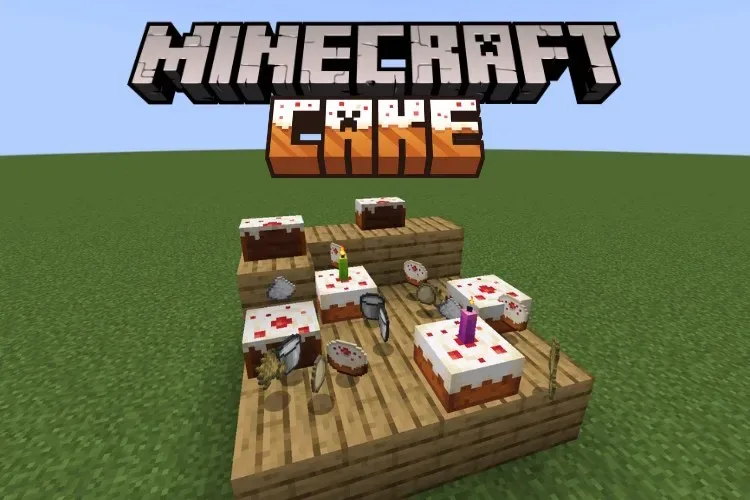
Cake is the odd one out among Minecraft foods: you do not hold it and eat it, you place it on a surface and take slices from the block itself, one bite at a time, until only the plate is gone. That makes it part meal, part decoration and part redstone component, and despite being fiddly to craft, it has stayed a beloved part of the game since the early days.
How do you craft a cake?
The recipe asks for three buckets of milk, two sugar, one egg and three wheat, arranged across the crafting grid. It is one of the more demanding food recipes in the game, because it pulls together farming, animal keeping and exploration ingredients in a single item. The good news is that the empty buckets are returned to you once the cake is crafted, so the iron is a one-off investment rather than a running cost.
Because of that ingredient list, cake is rarely an early-game food. Most players bake their first one after setting up a wheat field, catching a couple of chickens and milking a cow nearby — by which point cake becomes less a survival tool and more a small celebration, which suits it rather well.
How does eating a cake work?
Once crafted, cake must be placed on top of a solid block before anyone can eat it. You then interact with it to take a slice, and each slice restores a small amount of hunger. A whole cake holds seven slices in total, and players can share it freely — a group can gather round one cake and each take a bite, which makes it a surprisingly social food for multiplayer servers and birthday builds.
There are quirks worth knowing. You cannot pick a cake back up once it has been placed, even untouched, and you cannot eat from it while your hunger bar is completely full. The slice-by-slice eating also means cake works while you are doing other things nearby; you nibble as you pass rather than stopping to work through a whole item.
Is cake a good food for survival?
Honestly, no — at least not on efficiency. The ingredients could feed you far better in other forms, and a placed cake cannot travel with you, which rules it out for mining trips and exploration. Its saturation is modest, too, so a cake will not keep you going for long during heavy work.
Where cake earns its place is at home. A cake on the table of a shared base never needs restocking from your personal supplies, guests can help themselves, and it looks the part in a way a chest of bread never will. Treat it as furniture that happens to be edible and you will not be disappointed.
What does cake do with redstone?
Here is the part many players never discover: a comparator can read a cake. As slices are eaten, the signal strength the comparator outputs changes, dropping step by step as the cake shrinks. It is a niche behaviour, but redstone builders have used it for counters, party tricks and hidden triggers — a puzzle room that reacts when someone takes a slice is a classic.
It is also one of the few food-related redstone signals in the game, which makes cake quietly useful in contraptions that need a compact, readable set of states. Seven slices means seven distinct levels to work with, without any moving parts at all.
Where else does cake turn up?
Cake has a life outside the kitchen. Pandas have a well-known fondness for it and will wander over to eat cake placed near them, which is charming if slightly wasteful. Cake also appears as a natural flourish in decorated builds everywhere — bakeries, market stalls, wedding venues and birthday rooms on servers are rarely without one.
There is even an in-game advancement tied to placing and sharing cake with others at a table, a nod to how social the block has become. Few items in Minecraft have travelled so far from their original purpose while still doing the job they were made for.
When is it worth baking one?
Bake a cake when you have the ingredients spare and a reason to mark the moment: finishing a base, winning a fight you had been putting off, or simply furnishing a kitchen that deserves better than a furnace and a chest. Keep the milk buckets, sugar and eggs coming from a small farm and cakes become cheap enough to place purely for looks.
Just remember the golden rule of cake placement: once it is down, it stays down. Choose the spot with the same care you would give a painting, then invite everyone round for a slice.
Frequently Asked Questions
How many slices does a Minecraft cake have?
A full cake has seven slices. Each time a player interacts with the placed cake they eat one slice and restore a little hunger, and the block visibly shrinks. Once the seventh slice is taken, the cake is gone entirely.
Can you pick up a cake after placing it?
No. Once a cake is placed it cannot be returned to your inventory, even if nobody has taken a slice. Breaking the block or the block beneath it simply destroys it, so choose the spot carefully before you put it down.
What ingredients do you need to make a cake?
Three buckets of milk, two sugar, one egg and three wheat. The recipe uses a full crafting grid, and the empty milk buckets are handed back to you after crafting, so the buckets are a one-time cost rather than something you lose with every cake.
Can a comparator really read a cake?
Yes. A redstone comparator placed against a cake outputs a signal that changes as slices are eaten, growing weaker the more of the cake is gone. Builders use it for counters, secret triggers and playful contraptions that react when somebody helps themselves to a slice.