Minecraft Cow Variants and the Mooshroom, Explained
Temperate, cold and warm cow families explained, plus where the mooshroom fits, how drops and breeding stay familiar, and tips for moving regional herds safely.
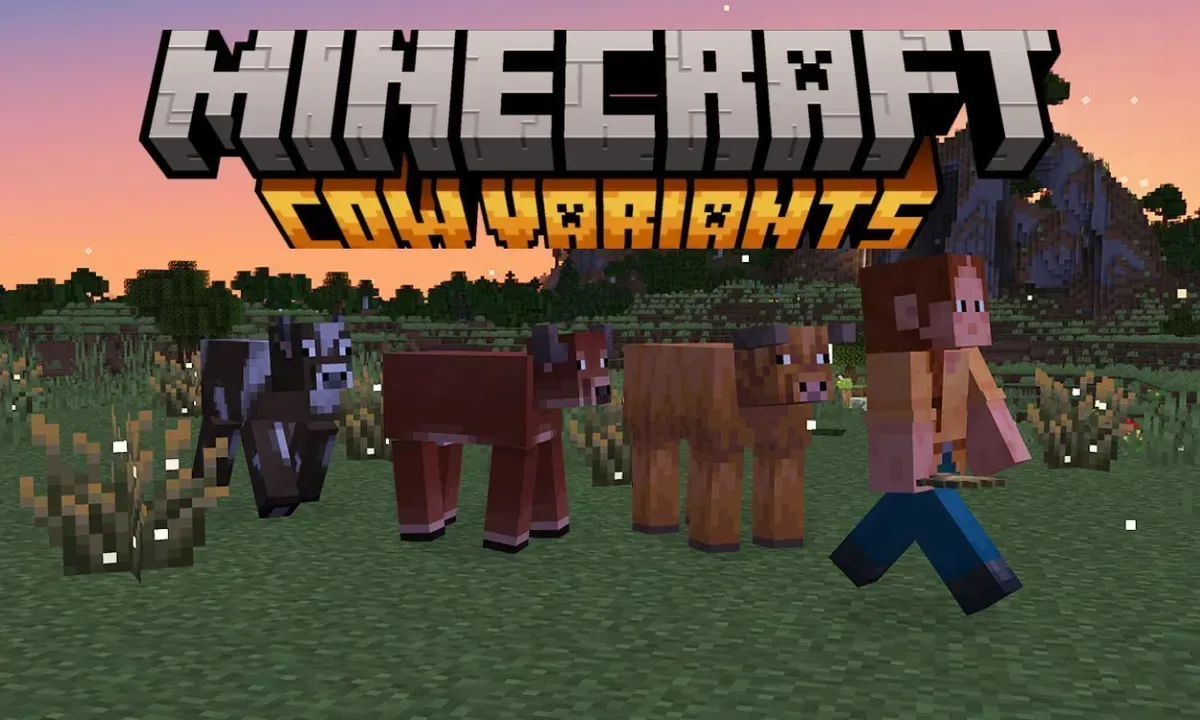
Temperate, cold and warm cow families explained, plus where the mooshroom fits, how drops and breeding stay familiar, and tips for moving regional herds safely.
Minecraft’s cow variants follow the same climate idea as several newer animal families: temperate cows are the familiar pasture animals, while cold and warm variants give snowy and hot biomes herds that look as if they belong there. Under the hide, they are still the dependable cow — milk with a bucket, leather and beef when slaughtered, and breeding driven by wheat. Separately, the mooshroom remains its own famous oddity rather than just another coat: a mushroom-country cow with its own stew trick and a long history in the game. If you like farms that match their landscape, variants let a northern barn and a desert ranch feel related without looking cloned.
How are cow variants organised?
Think in families, not in a collector’s spreadsheet. The temperate family belongs to the ordinary grasslands, villages and starter pastures where most players meet their first herd. Cold variants are the ones to seek around snowy ground, icy woods and high chilly country, where a heavier-looking herd suits the weather. Warm variants belong to the dry, bright side of the world: savanna, desert edges, badlands approaches and other places where water, shade and grass become part of the farm design. None of this makes one family stronger. Milk is milk, and a cow that matches its barn is a design reward rather than a stats upgrade.
That framing keeps expectations healthy. If a cow wanders across a border or is bred into a mixed herd, do not panic about purity unless you are running a display farm. For most worlds, regional herds happen naturally because you settle in one place and breed what you found nearby.
Where does the mooshroom fit?
The mooshroom is the exception everyone remembers, and it should be treated as its own destination rather than a random cow costume. Mooshrooms belong to mushroom fields, can be milked and can also provide mushroom stew when you use a bowl, which makes them one of the neatest food curiosities in Minecraft. There are red and brown associations in players’ minds because lightning and breeding have made brown mooshrooms a famous chase for collectors, but the key point is simpler: a mooshroom is not the temperate cow in fancy dress. It is a separate fungal branch of cow life.
If you find mushroom fields, prepare before you celebrate. Boats, leads and a safe route matter, because the journey home is usually less peaceful than the island itself. A mooshroom pen also deserves its own signage; mixing it into the general beef herd is how rare animals get lost in the accounts.
Do variants change milk, leather or breeding?
For the ordinary cow families, keep your survival routine unchanged. A bucket gives milk, which is valued less as food than as a reset button for potion effects after a suspicious stew, a raid omen or a cave snack gone wrong. Leather feeds books, item frames and early armour; beef remains a solid cooked food. Wheat is the breeding key, and calves can be hurried along with more wheat, although a relaxed herd will grow up perfectly well while you are busy elsewhere.
The practical difference is management. If you want regional breeding stock, keep families in named pastures and be careful which animals you feed during a mass breeding session. If you only need milk for a cake and leather for a library, the nearest cow is already the best cow. Minecraft rewards both attitudes, but not at the same time in the same pen.
How should you collect and move cows?
Wheat is the gentle lure, leads are the reliable handle, and boats are the unsung heroes for rivers and coasts. Move in daylight when you can, fence the route through dangerous gaps, and remember that cows are better at following hope than instructions. A collecting trip for a cold herd should include spare food, a bed and torches; a warm-biome trip needs water awareness and shade at the destination, because a themed barn that slowly roasts its occupants is not much of a theme.
- Set up separate pastures before importing a new family.
- Carry wheat for luring and breeding, not just for the journey out.
- Use boats or leads for rare animals instead of trusting a food trail through hostile country.
- Keep mooshrooms apart from ordinary herds so they are easy to find and protect.
Which cows should a base keep?
Keep a small utility herd near the kitchen and library, then let regional farms carry the character. A snowy lodge looks right with cold cattle beyond the fence; a savanna ranch wants warm cattle under an acacia roof; the home meadow can stay gloriously ordinary with temperate cows and a few too many calves. If storage and land are limited, prioritise function: milk access, leather supply and a breeding pair matter more than completing the set.
Still, there is real pleasure in a world map dotted with herds that could only have come from their own corners. Variants turn “some cows by the wheat” into evidence of travel. That is a modest feature with a long tail, and it suits Minecraft perfectly: the world feels bigger when even the livestock remembers where it has been.
Frequently Asked Questions
What are the main cow variant families?
Ordinary cows are grouped by climate: temperate cattle for normal pastures, with cold and warm variants associated with colder and hotter biome families.
Is a mooshroom just a cow variant?
Not really. The mooshroom is its own mushroom-fields animal, famous for milk and mushroom stew with a bowl, rather than simply another regional cow coat.
Do cow variants give different milk or drops?
Regular cow families are used the same way: milk with a bucket, leather and beef as drops, and wheat for breeding. The difference is mainly appearance and region.
How do you move a rare cow safely?
Use wheat to lure, a lead for control, or a boat for water routes. Build or prepare the destination pasture first, especially for mooshrooms or a regional breeding herd.