Minecraft Dyes: All 16 Colours and Where to Find Them
A practical guide to Minecraft's 16 dyes, covering flower, lapis, cocoa, ink, bone meal and cactus sources, mixed colours, and the blocks worth colouring first.
A practical guide to Minecraft's 16 dyes, covering flower, lapis, cocoa, ink, bone meal and cactus sources, mixed colours, and the blocks worth colouring first.
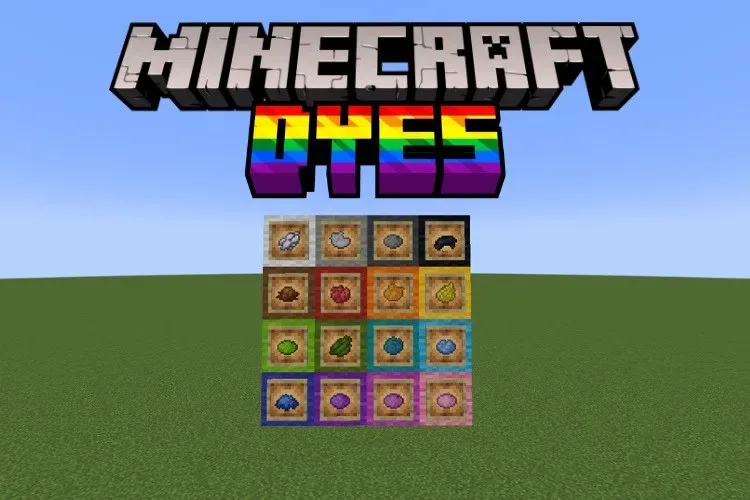
Minecraft has 16 dye colours, and most builds become easier once you treat dye as a small supply chain rather than a decoration you hunt for at the last minute. Start with the dependable primaries: flowers give reds, yellows and several handy one-step colours, lapis lazuli gives blue, cocoa beans give brown, ink sacs give black, bone meal gives white, and cactus can be smelted into green. After those are sorted, the mixed colours are mostly a matter of combining two ingredients in the crafting grid, which means a modest flower patch, a sugar cane strip, a cactus row and a steady source of bones can keep banners, beds, wool and glass looking deliberate instead of random.
Where do the main dye colours come from?
The cleanest way to think about dye is by family. Flower dyes are the flexible group because meadows, plains and flower forests hand you poppies, dandelions, cornflowers, tulips, alliums, lilies and other useful blooms; some craft directly into dye, while taller flowers can be especially productive when you use bone meal or find a good patch. Blue is the odd one out because it leans on lapis lazuli rather than a plant, unless you use cornflowers as a smaller shortcut. Brown comes from cocoa beans in jungle areas, black from squid ink sacs or wither roses if you are feeling brave, and white from bone meal or lily of the valley. Green is made by smelting cactus, which makes a desert or badlands cactus farm feel far more useful than it first looks.
Which dyes are made by mixing?
Once the base colours are in a chest, the second tier is simple combination work. Pink is usually red plus white, light blue is blue plus white, magenta blends purple tones with pink or related colours depending on the recipe you have available, lime is green plus white, grey is black plus white, light grey softens that further, cyan pairs green with blue, purple pairs red with blue, and orange pairs red with yellow. The exact grid placement is forgiving in modern crafting, so the important habit is to check whether you already own both halves before running across the map for another flower.
- Keep white dye stocked, because it softens colours into pastel shades.
- Save some blue and red separately before making purple, so one project cannot eat the whole supply.
- Make small test pieces of wool or glass before committing a full stack.
What can you actually dye?
Wool is the classic target because it feeds beds, banners, carpets and pixel art, but dye reaches much further. You can colour leather armour, which is still handy for team games, disguises and role-play servers. Sheep can be dyed before shearing, which is the efficient option if you need the same colour again and again: one dyed sheep is a small factory that turns grass into coloured wool. Stained glass and glass panes take dye cleanly and are perfect for greenhouses, beacons and moody church windows. Terracotta is another big one, because stained terracotta gives builders muted, earthy blocks that plain concrete cannot match. Add candles, beds, shulker boxes, collars, firework components and banner patterns, and dye stops being a side ingredient; it becomes part of how a base communicates.
There are limits worth remembering. Dye does not recolour every block, and concrete powder must be crafted with dye before it becomes concrete. Some colours photograph differently under warm torchlight than under daylight, so a shade that looks perfect in a test wall at noon may feel muddy in a cave base. Build one sample corner, step back, then decide.
How should you farm dye without turning it into a chore?
Start local. A two-by-two spruce taiga is not a dye farm, but the flower patches around your first base often cover early needs. For long-term supply, bone meal on grass in a suitable biome can produce flowers quickly, tall flowers are excellent where available, and a cactus row behind a fence solves green forever. Squid spawn in water and are easier to harvest if you light the area and avoid deep ocean trips at night. Cocoa grows on jungle logs, so even a tiny jungle outpost can pay rent. If you play with villagers, keep an eye on wandering traders and markets on servers, but do not build your plan around luck.
The real trick is rhythm: whenever you pass a flower forest, fill the spare inventory slots; whenever you smelt sand, run a little cactus too; whenever you fight skeletons, tip the bones into the dye chest rather than a random barrel. Dye farming works best as a background habit, not a special expedition launched after you have already placed six hundred white blocks.
Which colours are worth stocking first?
For most survival bases, white, black, grey, brown, green, blue and red cover the widest range of roofs, maps, banners and machinery labels. After that, cyan and light blue are brilliant for ice, water and fantasy builds, lime stands out on signs, and pink has become a genuine building colour rather than a joke because cherry wood and pale interiors pair so well with it. Yellow and orange earn their keep in autumn themes, desert towns and warning stripes around dangerous contraptions.
Frequently Asked Questions
How many dye colours are there in Minecraft?
There are 16 dye colours. Some are made directly from flowers, lapis, cocoa, ink, bone meal or cactus, while others are mixed from two simpler dyes.
What is the easiest way to get lots of one colour?
Dye a sheep that colour and shear it repeatedly. It is usually better than hunting for flowers every time you need matching wool, beds or carpets.
Can you dye glass and terracotta?
Yes. Dye is used to make stained glass and stained terracotta, and it is also used for wool, beds, banners, candles, leather armour and several other decorative items.
Which dye ingredients should every base keep?
Keep bone meal for white, lapis for blue, cocoa for brown, ink sacs for black, flowers for red and yellow, and cactus for green. Those basics can be mixed into most other shades.