Minecraft Enchanting Table Guide: Bookshelves, Levels and Smarter First Enchants
Build the bookshelf setup, spend lapis and levels wisely, learn what the table cannot offer, and choose between direct rolls and careful book work.
Build the bookshelf setup, spend lapis and levels wisely, learn what the table cannot offer, and choose between direct rolls and careful book work.
An enchanting table turns experience and lapis lazuli into the upgrades that make mid-game Minecraft feel fair. It can put Protection on armour, Sharpness on a sword or Efficiency on the pickaxe that has been annoying you for days. The catch is randomness: the table offers three choices, the highest needing a proper bookshelf setup, and it will not hand you every prized enchantment. Used well, it is still the cheapest way to build your first strong set before you lean on anvils and librarians.
How do you craft and set up an enchanting table?
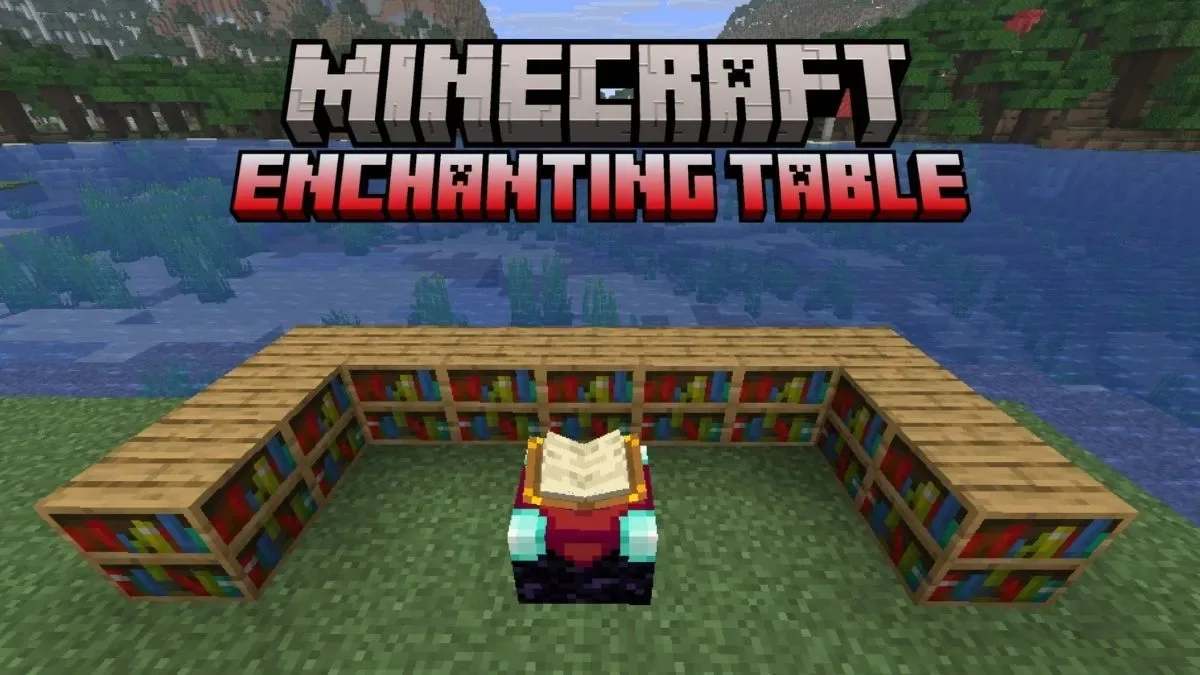
The recipe uses one book, two diamonds and four blocks of obsidian. Those diamonds are a serious early investment, so place the table somewhere permanent rather than carrying it from cave to cave. A good enchanting corner needs the table, room for bookshelves around it, a chest for lapis and spare gear, and enough light that the corner itself does not become a monster cupboard.
Bookshelves raise the level of the offers. Fifteen bookshelves is the classic full setup for reaching level 30 enchantments, with a one-block air gap between the shelves and the table. Carpets, torches or stray blocks in that gap can block shelves from counting, so if your top offer refuses to climb, inspect the space before blaming bad luck. The arrangement can be a neat U-shape or a full ring, as long as the shelves are close and the gap stays clear.
How does enchanting actually work?
Put the item in the table, add lapis lazuli, and you will see three options. The first usually costs one lapis and one experience level to take, the second two of each, and the third three of each, although unlocking that third row requires enough levels and bookshelves. The actual price charged is the small lapis and level cost shown on the option; the higher requirement is about having enough experience available when you choose it.
The strange glyphs beside the options are written in the Standard Galactic Alphabet, the same playful script used in Commander Keen. They are flavour rather than a reliable translation of the result. The preview names one enchantment you are guaranteed to receive, but extra enchantments may come with it, especially on high-level picks. That is why a level 30 sword can feel like a prize draw: you know part of the outcome, not the whole parcel.
What can the table not give you?
Some enchantments are treasure enchantments and do not appear as normal table offers. Mending is the famous example, along with Frost Walker, Soul Speed and the curses; those come from loot, fishing, trading, bartering or special structures depending on the enchantment. If you keep enchanting boots hoping the table will eventually relent and produce Mending, stop. The table is not hiding it. It is simply outside that menu.
The table also cannot remove enchantments or neatly choose a single effect from a list. A grindstone can strip most enchantments from an item and return a little experience, except for curses, which makes it useful for recycling bad fishing rods or loot gear. An anvil can combine items and apply enchanted books with far more control, but the experience cost rises as an item is worked on again and again.
Should you enchant items directly or use books?
Direct enchanting is best when you want value quickly. Armour and tools can receive several useful enchantments in one level 30 roll, which is efficient for a first diamond set. The risk is waste: a pickaxe may come back with something decent but not the Efficiency and Fortune pairing you wanted, and removing the result means starting again with a fresh tool.
Books are the careful route. Enchant books, keep the good ones, and combine them deliberately on an anvil. This suits long-term gear, named weapons and pieces you plan to upgrade to netherite. It is slower and can become expensive in levels, but it avoids throwing away a nearly perfect item. A sensible progression is table first for solid everyday gear, books later for the equipment you intend to keep for months.
What should you enchant first?
For a first diamond set, prioritise the armour you wear every day and the pickaxe that funds everything else. Protection is a strong general choice on armour; Feather Falling is precious on boots; Efficiency and Unbreaking make a pickaxe feel civilised, while Fortune is better saved for a dedicated ore tool rather than your only work pick. A sword with Sharpness and Looting ambitions can wait if your armour still resembles tissue paper.
Do not spend your last levels the night before a big trip. Enchant at home, repair before combining, and keep a small experience reserve for naming and anvil work. The table rewards patience more than drama. Build the shelf nook, feed it lapis, roll a few good pieces, and let the disappointing rolls go to the grindstone. That rhythm, repeated calmly, is how an enchanting setup quietly carries a whole survival world.
Frequently Asked Questions
How many bookshelves do you need for level 30 enchantments?
Fifteen bookshelves is the standard full setup for level 30 offers. Leave a one-block air gap between the enchanting table and the shelves, and keep that gap clear of torches, carpets and other blocks.
What do you need to use an enchanting table?
You need the item to enchant, lapis lazuli and enough experience levels. The three options charge one, two or three lapis and levels when chosen, with the bottom option needing the strongest bookshelf setup.
Can an enchanting table give Mending?
No. Mending is a treasure enchantment, so it does not appear in normal enchanting table offers. Look for it through fishing, loot or villager trading instead.
Is it better to enchant books or items?
Direct item enchanting is faster and can give several effects at once, which suits a first diamond set. Books give more control through an anvil and are better for carefully building long-term gear.