Minecraft Farming Guide: Water, Light and Layouts That Grow Faster
Hydrated soil, a water channel every few rows, honest light and one layout trick most players never learn. The complete basics of growing wheat, carrots, potatoes and more.
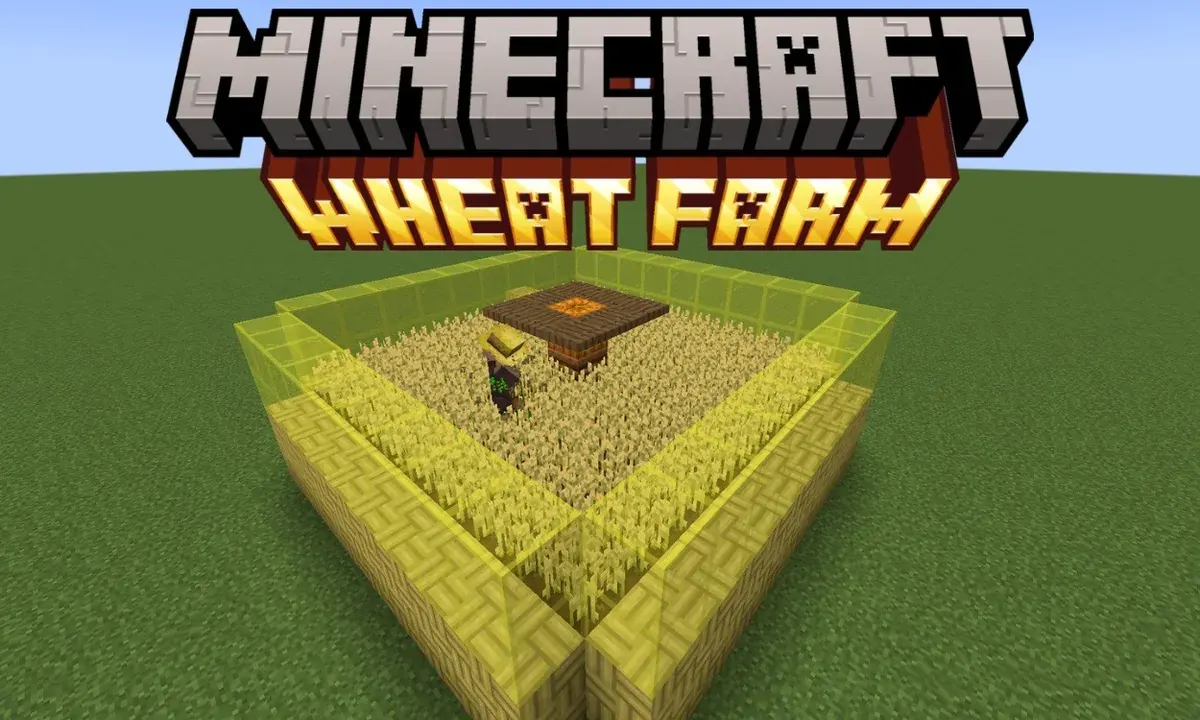
Hydrated soil, a water channel every few rows, honest light and one layout trick most players never learn. The complete basics of growing wheat, carrots, potatoes and more.
Farming crops in Minecraft comes down to four things: tilled soil, water nearby, enough light, and time. Get the first three right and wheat, carrots, potatoes and beetroot will grow steadily anywhere; neglect any one of them and your field will crawl, dry out or refuse to grow at all.
How do you prepare farmland properly?
Use a hoe on dirt or grass to till it into farmland, then plant straight away or keep it near water, because empty tilled soil eventually reverts to plain dirt — and jumping or falling on farmland can trample it back, wrecking the crop on it. Hydrated farmland is dark brown and is what you want: crops grow noticeably faster in it, and it resists drying out. Dry farmland still grows crops, just slowly, and it is one dry spell away from reverting if nothing is planted in it.
How close does water need to be?
A single water block hydrates the farmland in a generous square around itself, reaching several blocks in every direction including diagonally, so one well-placed channel or pond can serve a surprisingly large field. This is why the classic layout is long rows of crops separated by single water channels, sometimes with slabs or lily pads over the water so you can walk the field without falling in. One water source is enough — flowing water works for hydration too, though still water is tidier to build with.
How much light do crops need?
Crops need a decent level of light where they are planted, roughly the brightness of a torch-lit room or better. Outdoors, daylight does the job and crops pause their growth overnight unless you sleep through the dark. Underground and indoor farms are perfectly viable — greenhouses, barn lofts, even a cave with a farm carved into it — as long as you hang enough torches, lanterns or glowstone to keep the field bright. Light from the block above the crop is what counts, so a roofed farm needs its lamps inside, not on the roof.
How should you lay out a field for faster growth?
Here is the detail most players never learn: crops grow faster when they are not surrounded by identical crops. A field of nothing but wheat grows more slowly than one planted in alternating rows — wheat, then carrots, then potatoes — or with empty farmland spacing between rows. For a small kitchen garden it hardly matters, but for a big bread-and-golden-carrot operation the alternating-row layout measurably outperforms a monoculture. Bone meal, made from bones, remains the emergency shortcut: it advances a crop's growth instantly, and repeated applications can take wheat from seed to harvest in seconds when you need bread now rather than tomorrow.
Which crops are worth farming, and for what?
- Wheat — bread, and breeding food for cows and sheep; the all-rounder
- Carrots — reliable food, pig and rabbit breeding, and the route to golden carrots
- Potatoes — bake them for a solid staple; also pig food and a trading crop
- Beetroot — the weakest food of the four, but useful for soup, dye and pig breeding
- Pumpkins and melons — grow on stems from a single planting, for pies, potions and trading
Sugar cane, kelp and bamboo follow their own rules — they need no hoe and no farmland, just the right spot beside water or on sand and dirt — and are covered by their own habits rather than this one. Cocoa grows on jungle logs, and nether wart insists on soul sand in any light, including none.
How do you harvest without wrecking the field?
Break the crop, not the soil: a fully grown crop drops its produce plus seeds to replant, and walking carefully along the rows keeps the farmland intact. Water channels earn their keep again here — a bucket poured at one end of a harvested row can wash loose drops towards you. Villager farmers, given a field and a composter, will plant and harvest on their own and toss food to other villagers, which is the seed of every automatic bread farm. And keep a fence around it all: one wandering creeper, or one player sprinting carelessly across the beds, does more damage than a season of neglect.
Frequently Asked Questions
How far does water reach in a Minecraft farm?
One water block hydrates farmland several blocks away in every direction, including diagonally, so a single channel can keep a wide field moist. Hydrated farmland is dark brown and grows crops much faster than dry farmland.
Do crops grow at night or underground?
Crops need reasonable light on the crop itself, so they pause outdoors at night but grow happily underground or indoors if you light the field with torches, lanterns or glowstone. Daylight is free, but it is not the only option.
Why do alternating rows of crops grow faster?
Crops grow more slowly when crowded by identical neighbours. Planting different crops in alternating rows — or spacing rows with empty farmland — speeds the whole field up, which matters on large wheat, carrot and potato farms.
What does bone meal do to crops?
Bone meal advances a crop's growth instantly by several stages, and repeated use can take most crops from freshly planted to harvestable in moments. It is made from bones and is the standard shortcut when you need food immediately.