Froglights in Minecraft: Colours, Farming and Uses
A frog that eats a small magma cube drops one of the brightest blocks in the game. Here is how the three froglight colours work and how to farm them.
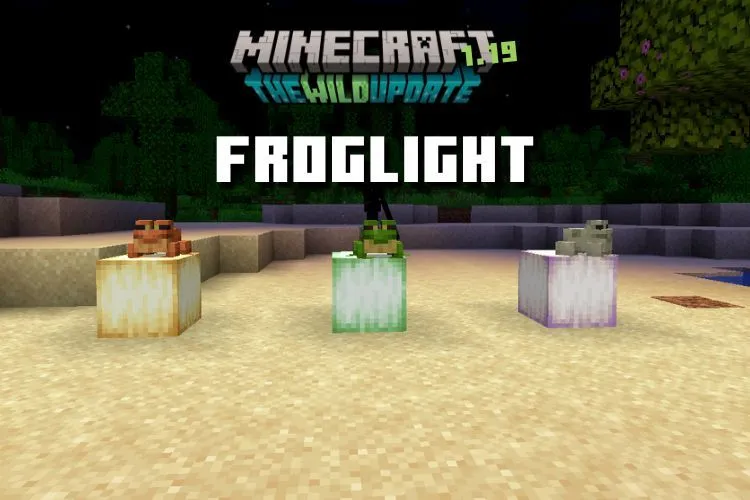
A frog that eats a small magma cube drops one of the brightest blocks in the game. Here is how the three froglight colours work and how to farm them.
A froglight is a glowing block that a frog produces after eating a small magma cube, and it sits in the brightest tier of light sources in the game, on par with glowstone, sea lanterns and a lit lantern's strongest rivals. It comes in three colours — ochre, pearlescent and verdant — and which one you get depends on which variant of frog does the eating.
How do you get a froglight?
You do not craft a froglight and you cannot mine one from the landscape. Instead, you have to arrange a meeting between a frog and a small magma cube, then let the frog's tongue do the rest. When a frog catches and swallows a magma cube of the smallest size, it drops a froglight of the colour tied to its variant. Bigger magma cubes are too much for it, so you want the little ones — either naturally small spawns in the Nether or the fragments a larger cube splits into when it dies.
In practice, most players build a small setup in the Nether, usually near a basalt delta or a Nether fortress where magma cubes are common. Lead or carry a frog there, fence in a working area, and let cubes hop in. It is a strange little factory, but once it is running it produces light blocks steadily without costing you glowstone dust or prismarine.
Which frog gives which colour?
Frogs come in three variants, and each one is linked to a single froglight colour:
- Temperate frogs — the orange ones raised in mild biomes — produce ochre froglights, a warm yellow.
- Warm frogs — the pale, sandy-coloured ones from hot biomes — produce pearlescent froglights, a soft pinkish white.
- Cold frogs — the green ones raised in snowy or frozen places — produce verdant froglights, a fresh green.
The important detail is that a frog's variant is decided by the biome where it grows up from a tadpole, not where you found the adult. So if you want a particular colour, raise your tadpoles in the right climate first, then transport the adults to the Nether. A bucket of tadpoles and a bit of patience gives you all three colours from one breeding pair.
How bright is a froglight?
Froglights give off the maximum light level the game allows for a block, which puts them level with the classic end-game light sources. That means a single froglight lights the same radius as glowstone or a sea lantern, keeps hostile mobs from spawning in the same area, and melts nearby snow and ice in the same way. For most builds the choice between them comes down to looks and how easy they are to gather, not brightness.
Because they are full blocks with a smooth, slightly organic texture, froglights also read differently in a build. Ochre suits sandstone and warm wood palettes, pearlescent works beautifully in End-style or quartz builds, and verdant is one of the few genuinely green light sources, which makes it popular for jungle, slime and alien themes.
Where do players actually use froglights?
The honest answer is anywhere you would have used glowstone but wanted a cleaner finish. Froglights sit flush in floors and ceilings, work underwater, and do not need a support block, so path lighting, modern interiors and aquarium builds all suit them. Street lamps are another favourite: a fence post, a froglight and a trapdoor cap reads as a designed lamp rather than a torch stuck on a stick.
They are also renewable in a way glowstone is not. Glowstone depends on Nether clusters or witch drops, and sea lanterns depend on ocean monuments. A frog farm, once built, just keeps going — feed it magma cubes and it pays you in light. For a long-term survival world, that reliability is the real attraction.
What should you watch out for?
Getting frogs to the Nether is the fiddly part. Frogs cannot use a lead as reliably as some animals over long distances, and boats, minecarts and careful portal placement all get used. Keep spare frogs safe away from the work area, because lava, falls and stray magma cube contact can thin your breeding stock quickly. It also helps to split the cubes: kill the big ones yourself and let the small fragments reach the frogs.
Finally, remember that frogs only produce a froglight when they eat the cube — a frog wandering a magma-free base will never drop one. Set up in cube territory, or bring the cubes to the frogs in a controlled pen, and the colours will follow.
Frequently Asked Questions
Can you craft a froglight?
No. A froglight only appears when a frog eats a small magma cube, and the frog drops it as an item. The colour depends on the frog's variant: ochre from temperate frogs, pearlescent from warm frogs and verdant from cold frogs.
How bright is a froglight compared with glowstone?
They are equal. A froglight emits the highest light level a block can give, the same as glowstone, sea lanterns and shroomlights, so it covers the same area and prevents hostile mob spawns just as effectively.
How do you get all three froglight colours?
Raise tadpoles in different climates. A tadpole that grows up in a temperate biome becomes an orange frog, in a warm biome a pale frog, and in a cold biome a green frog. Feed each variant small magma cubes and you will collect all three colours.
Where is the best place to farm froglights?
Somewhere magma cubes spawn regularly, such as a basalt delta or near a Nether fortress. Bring frogs through a portal, pen them safely, break large cubes down into small ones, and let the frogs eat the small cubes to drop froglights.