Mud in Minecraft: Making It, Mud Bricks and Drying It into Clay
One splash of water turns dirt into mud — the start of a chain that runs through packed mud and mud bricks, and ends with dripstone drying it into renewable clay.
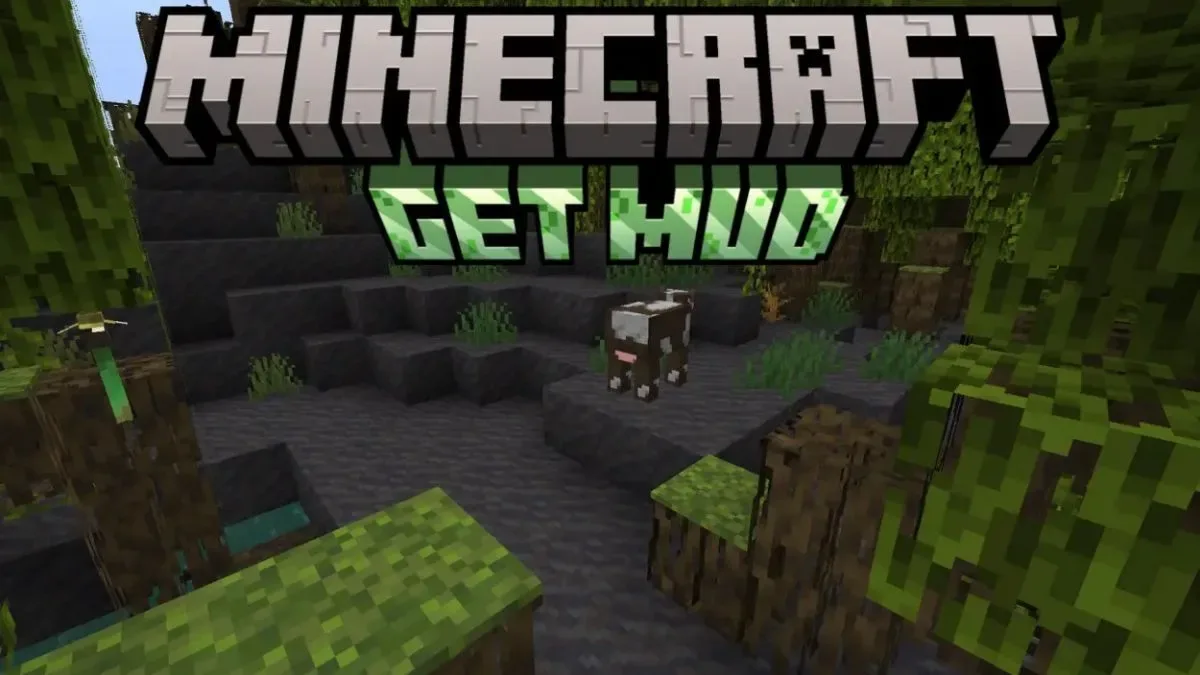
One splash of water turns dirt into mud — the start of a chain that runs through packed mud and mud bricks, and ends with dripstone drying it into renewable clay.
Mud is what you get the moment dirt meets water in Minecraft: use a water bottle on a dirt block and it soaks into a dark, soft block of mud that you can dig up and carry away. From there it becomes packed mud and mud bricks for building, and — through a neat dripstone trick that dries it out — a renewable way of producing clay.
How do you turn dirt into mud?
Hold a water bottle and use it on dirt, coarse dirt or rooted dirt. The block drinks the water, turns into mud, and you get your glass bottle back, ready to refill at the nearest pond. One bottle converts one block, so converting a whole floor takes a pocketful of bottles and a water source nearby — an afternoon's pottering rather than an expedition.
There is no way to splash-convert mud in bulk the way you might hope, so plan big projects in batches. The good news is that dirt is everywhere and water is free; the conversion itself costs nothing but a little time, and mud dug up with a shovel drops as an item you can place wherever you actually want it.
Where does mud generate naturally?
Mangrove swamps are carpeted in it. The entire floor of the biome is mud rather than grass, with mangrove trees rooting down into it and frogs hopping between the puddles. If you need a few stacks quickly and a mangrove swamp is within reach, digging there is faster than converting dirt block by block — and you will probably come home with frogs, propagules and lily pads as well.
Mud has another personality trait worth knowing in either location: it is slightly softer than a full block. You sink a fraction into it as you cross, so doorways and jumps measured against ordinary blocks feel a touch different over mud — a subtlety builders use deliberately for sunken paths and marshy, low-lying ground.
What do you craft from mud once you have it?
The processing chain is short and satisfying. Four mud in a crafting grid becomes packed mud, a firmer, lighter-coloured block. Combine packed mud with wheat and you get mud bricks — a proper masonry block with a warm, handmade look that comes with the full family of matching stairs, slabs and walls.
Mud also pairs with mangrove roots to make muddy mangrove roots, the murky, semi-transparent block that carpets the swamp floor around the trees. Together these blocks give builders a palette dirt never offered: adobe-style houses, desert compounds, garden walls and riverbanks that actually look damp. Mud bricks in particular have become a favourite for rustic bases, precisely because they look made rather than mined.
How does dripstone dry mud into clay?
Here is the trick that makes mud genuinely important. Place a mud block on top of a pointed dripstone — the spike pointing up underneath it, with space below — and the dripstone slowly wicks the water out of the mud. Leave it, and the drained block turns into a block of clay. No rivers to dredge, no luck involved; dirt, water and time in, clay out.
Clay matters because bricks and terracotta normally depend on finding clay deposits in rivers and lush caves, which run out. A row of mud blocks parked over dripstone spikes is a clay generator that never empties, fed by the two most common substances in the game. Line up a wall of them at a base and the clay arrives quietly in the background while you build.
Is mud worth bothering with for most players?
If you build with bricks or terracotta, absolutely — the dripstone conversion turns an exhaustible resource hunt into a renewable background process, and that alone earns mud its place. If you lean towards natural, rustic building, the mud brick family stands on its own merits: cheap, characterful and available from the first day you find dirt and water.
And if neither applies, there is still the simple pleasure of it. Mud is one of Minecraft's small alchemies — splash water on the ground, dig up the result, dry it into something new — and it makes the swamp end of the world feel properly, satisfyingly soggy.
Frequently Asked Questions
Do you lose the glass bottle when making mud?
No. Using a water bottle on dirt, coarse dirt or rooted dirt converts the block to mud and leaves you holding the empty glass bottle, which you can refill and use again.
How do you make mud bricks?
First craft four mud into packed mud, then combine packed mud with wheat to get mud bricks. Mud bricks come with matching stairs, slabs and walls, like other masonry blocks.
How does mud become clay?
Set a mud block above a pointed dripstone spike and leave it. The dripstone gradually draws the water out, and once fully dried the block turns into clay — a renewable clay supply from dirt and water.
Where can you dig up mud without crafting it?
Mangrove swamps are floored with natural mud, so a trip there with a shovel is the quickest way to gather stacks. It is the same block you get from wetting dirt.