Minecraft Music Discs: How to Get Them and How Jukeboxes Work
Music discs drop when a skeleton kills a creeper, and every disc sounds different in a jukebox — and outputs its own redstone signal. Here is how to collect them and what to build with them.
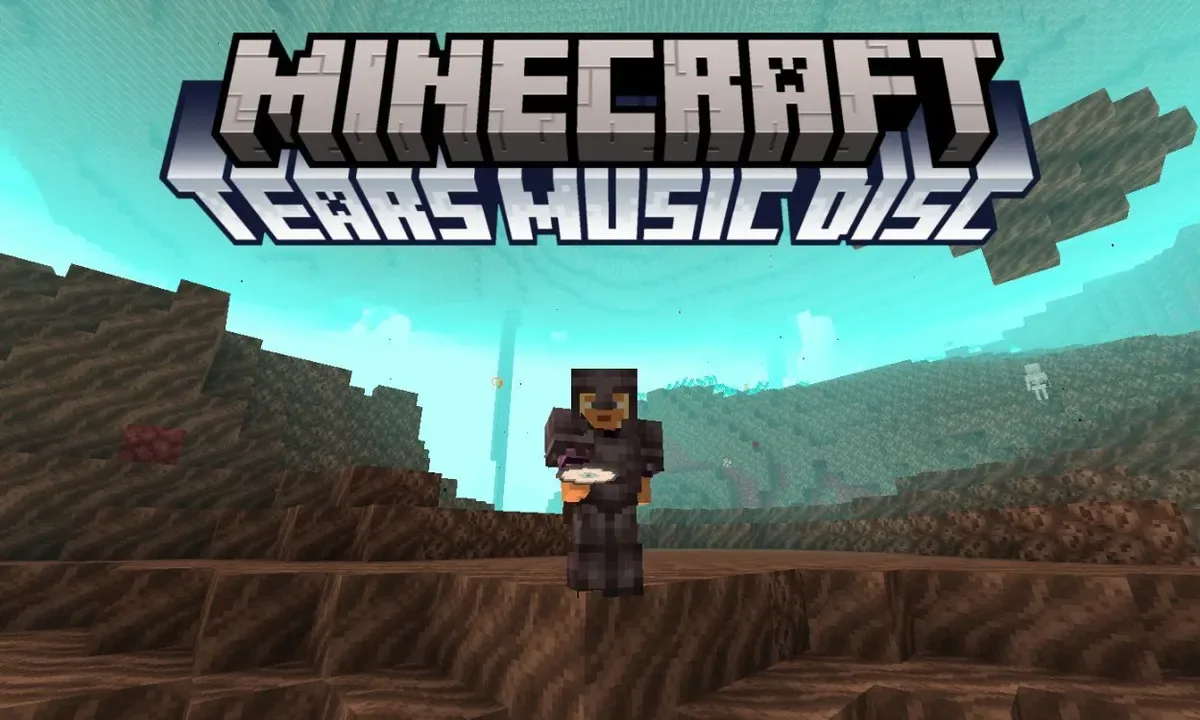
Music discs drop when a skeleton kills a creeper, and every disc sounds different in a jukebox — and outputs its own redstone signal. Here is how to collect them and what to build with them.
Music discs are Minecraft's collectible records: flat, unassuming items that play a proper piece of music when slotted into a jukebox, each with its own mood, from gentle piano pieces to odd, unsettling experiments. Most of them are won in one of the strangest ways in the game — by arranging for a skeleton to land the killing blow on a creeper — and a completed disc collection is a quiet badge of honour among long-term players.
How do you get a music disc from a creeper?
The classic method works like this: when a creeper is killed by a skeleton's arrow (a stray's arrow does the job too), it drops a random music disc instead of, or alongside, its usual gunpowder. The creeper must die from the skeleton's shot specifically, so the usual approach is to weaken the creeper yourself first, then manoeuvre it into a skeleton's line of fire and let the skeleton finish it.
In practice this means building a small trap. Players commonly lure both mobs into a pit or a boat, damage the creeper until it is nearly gone, and then let the skeleton's arrows do the rest. It is fiddly, occasionally explosive, and deeply satisfying the first time a disc pops out of the chaos.
Which discs can you collect?
The long-standing discs most players know by their catalogue-style names — titles such as 13, Cat, Blocks, Chirp, Far, Mall, Mellohi, Stal, Strad, Ward and Wait — are the ones that drop from creepers. Cat is the cheerful one most people play first; 13 is the eerie cave-noise piece that has unsettled players for years. Each was composed as a miniature track in its own right, and part of the fun of collecting is discovering which ones suit your base.
A few discs sit outside the creeper system entirely. Some arrived in later updates as loot in specific structures, or are assembled from rare disc fragments found in particular places, rather than dropping from mobs at all. If a disc refuses to appear from creepers no matter how many you sacrifice, that is usually why: it was never in the creeper pool to begin with.
How does a jukebox work?
Craft a jukebox from planks with a diamond at its heart, place it, and interact with it while holding a disc to start the music. Interact again to stop the track and eject the disc. The music plays for everyone nearby and fades with distance, which makes jukeboxes natural centrepieces for taverns, market squares and front rooms.
Parrots, delightfully, dance near a playing jukebox, bobbing along to whichever disc is on. It has no practical use whatsoever, and it is one of the most-loved details in the game.
Can jukeboxes interact with redstone?
Yes, and this is where discs become more than decoration. A comparator reading a jukebox outputs a signal whose strength depends on which disc is playing — each disc maps to its own signal level. Builders use that to make disc-activated doors, sorting puzzles and secret entrances that only open when the correct record is played, which is both secure and extremely stylish.
More recent additions to the game have expanded jukebox automation further, letting hoppers move discs in and out in some editions, so fully automatic record players and disc shufflers are now a realistic weekend project for redstone enthusiasts.
Where else can discs be found?
Creeper farming is the main route, but keep an eye out while exploring. Certain structures hold specific discs as chest loot, strongholds and dungeons have historically offered a couple of the classic tracks, and the fragment-assembled discs reward exploring the game's more dangerous corners. If you are looting a new structure type for the first time, checking every chest is worthwhile for this reason alone.
Traded or found, though, most collections are still built the hard way: one skeleton, one creeper, one disc at a time.
How should you store and display a collection?
Discs stack poorly with a disorganised storage system, so give them a dedicated chest or a row of item frames near the jukebox. Frames are the popular choice — a wall of discs above the record player turns a collection into a gallery, and visitors can see at a glance which ones you are still missing.
Keep spares of the common discs, too. A duplicate Cat is perfect trading stock on a multiplayer server, and you will be glad of a backup the day a creeper-related experiment goes wrong near your only copy of a favourite track.
Frequently Asked Questions
How do you get a music disc in Minecraft?
The main method is to have a skeleton kill a creeper: when the killing blow comes from a skeleton's arrow, the creeper drops a random music disc from the classic set. Most players weaken the creeper first, trap both mobs together and let the skeleton land the final shot.
Why is my creeper not dropping a disc?
The creeper must be killed by the skeleton's projectile itself. If your own hit, a fall or an explosion finishes it, you only get gunpowder. A few discs also never drop from creepers at all — they are found as structure loot or crafted from disc fragments instead.
What does a jukebox do with redstone?
A comparator attached to a jukebox outputs a different signal strength for each disc, which lets builders create disc-activated locks, puzzles and secret doors that respond only to a specific record. Jukeboxes also simply play music for everyone nearby and make nearby parrots dance.
Which music disc is the rarest?
It depends on the disc. Among the creeper drops they are broadly equal, but the discs obtained from fragments or specific structures are much harder work, since the fragments are rare loot in dangerous places and several are needed to assemble a single disc.