Note Blocks in Minecraft: Instruments, Tuning and Songs
One block, a whole band: the note block's instrument depends on what it stands on. Tuning, triggering and building your first working doorbell or song.
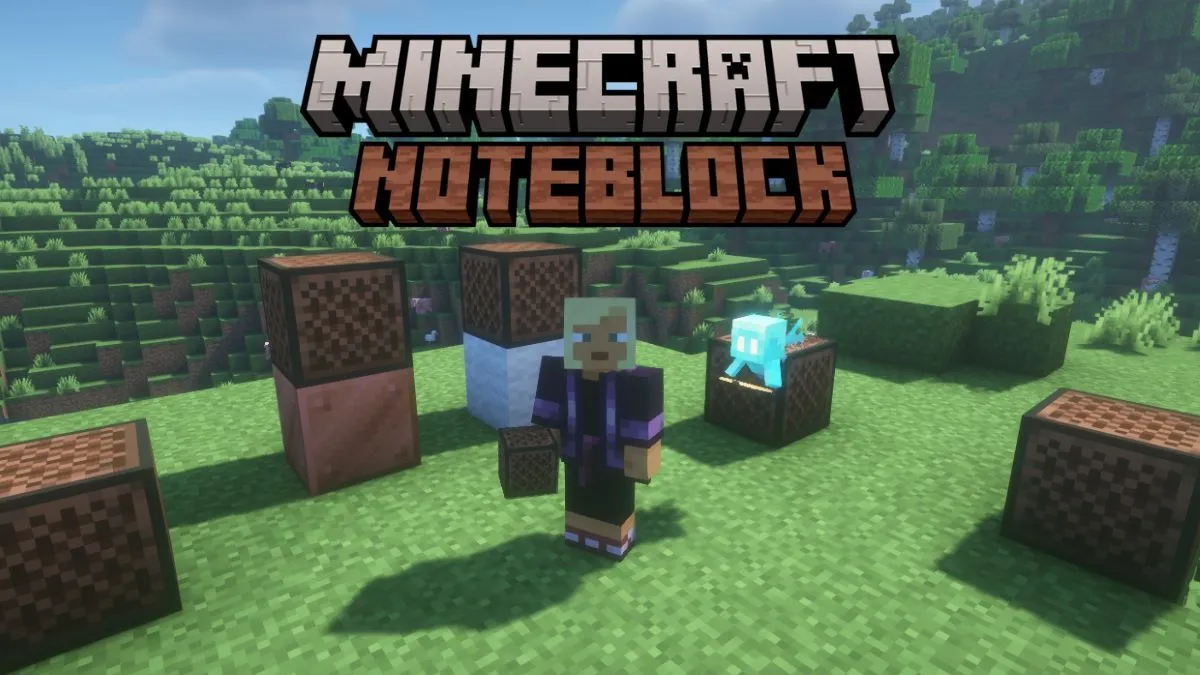
One block, a whole band: the note block's instrument depends on what it stands on. Tuning, triggering and building your first working doorbell or song.
A note block is a musical block that plays a single pitched note when you hit it or power it with redstone, and the instrument it imitates depends on the block underneath it — wood gives a bass, stone a drum-like thud, glass a ringing stick sound, and so on. String a few together with repeaters and you have the building block of almost every song, doorbell and alarm built in the game.
How do you craft and place a note block?
The recipe is simple: wooden planks all the way around a single piece of redstone dust in the middle. Note blocks are cheap, which matters, because a real tune can use dozens of them. Placement needs one practical check — the space directly above the block must be free. If anything sits on top of it, the note block stays silent, a trap that has confused many first-time song builders mid-project.
Once placed, hitting the block plays its note and also triggers it in the same way a redstone pulse would. For testing and tuning, punching your way along a row is the quickest workflow there is.
How do you change the instrument?
The instrument is chosen entirely by the block the note block rests on. The families are broad and worth learning:
- Wooden blocks give a deep bass; stone-based blocks give a bass drum.
- Sand and gravel give a snare; glass gives a crisp stick or click sound.
- Clay gives a flute-like tone; packed ice gives chimes; gold gives a bell.
- Wool softens things into a guitar sound, bone blocks play a xylophone, and iron adds a metallic glockenspiel flavour.
With nothing special underneath — plain dirt, for instance — you get the default harp or piano sound, which is the voice most simple tunes are written for. Swapping the floor under a finished melody is a quick way to hear the same song as a completely different arrangement.
How do you tune the pitch?
Use the note block (right-click, rather than hitting it) and the pitch climbs a step with each use, with small floating notes that change colour as you rise through the range. After the top of the range it wraps back to the bottom, so overshooting is annoying but never fatal. The range covers two octaves, which is enough for the vast majority of melodies people adapt into the game.
Builders who write a lot of music usually keep a reference block tuned to a known note nearby, and tune each new block against it by ear. Counting clicks from the bottom is the other reliable method: reset a block by breaking and replacing it, then count the uses as you climb to the note you want.
How do you play a song with redstone?
A redstone signal triggers a note block once, so songs are built by sending pulses down a line at controlled times. The standard pattern is a chain of repeaters between blocks, each repeater adding a small delay, so one button press ripples along the row playing notes in sequence. Chords are easy — branch the line so several blocks fire together. Loops come from feeding the line back through a clock circuit, and most doorbells are just two or three blocks and a button.
Underground and out of sight is the tidy approach: dig your repeater line beneath the floor, note blocks poking up where you want the sound. Volume falls with distance, so keep the audience area in mind when you hide the machinery.
Which block makes which sound, again?
If you keep muddling the families up mid-build, one habit saves endless swapping: build a test strip. Lay one block of each candidate material in a row, put a note block on each, and punch along the line to hear your options side by side before committing. Builders of large songs often keep a permanent 'instrument library' like this near the project — a labelled row of blocks they can audition in seconds. It takes five minutes to make and pays for itself in every arrangement after the first.
What do players actually build with note blocks?
Door chimes and base alarms are the everyday uses — a pressure plate by the door and a two-note greeting. Beyond that, the sky is the limit: full covers of famous songs, working pianos with rows of tuned blocks, haunted-house sound effects, and musical roads where a minecart track triggers a tune as you ride. Some players even use a single note block under a trapdoor as a subtle 'someone is here' signal in multiplayer bases.
Start small. A doorbell teaches you triggering, tuning and instruments in ten minutes, and every technique in the grand concert builds scales from there.
Frequently Asked Questions
Why is my note block silent?
Almost always because something is placed directly on top of it. The block above a note block must be air for it to sound. Clear the space above, and check the block underneath if the instrument sounds wrong rather than silent.
How do you change a note block's instrument?
Change the block underneath it. Wood gives bass, stone a drum, sand a snare, glass a stick click, clay a flute, packed ice chimes, gold a bell and bone blocks a xylophone, among others. With an ordinary block below, you get the default harp sound.
How do you tune a note block?
Use it (right-click) instead of hitting it. Each use raises the pitch one step through a two-octave range, then it wraps back to the lowest note. Breaking and replacing the block resets it to the bottom.
Can note blocks play automatically?
Yes. A redstone pulse triggers a note block once, so chains of repeaters can play whole songs note by note, buttons can ring doorbells, and clock circuits can loop a tune indefinitely.