How to Farm Obsidian in Minecraft
Water over lava source blocks, casting trays, dripstone lava on tap, and the ender dragon trick that makes obsidian renewable — every sensible way to stockpile the purple-black stuff.
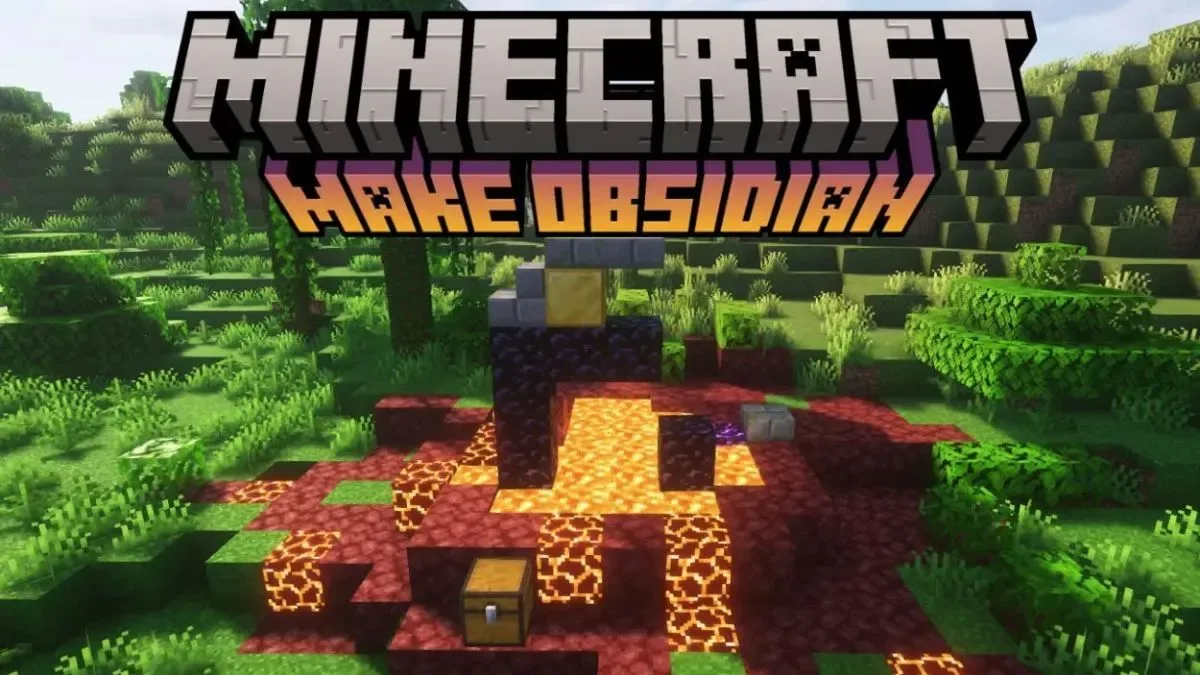
Water over lava source blocks, casting trays, dripstone lava on tap, and the ender dragon trick that makes obsidian renewable — every sensible way to stockpile the purple-black stuff.
Obsidian is slow to mine and always needed in awkward quantities — portals, enchanting tables, ender chests, beacon bases — so an obsidian farm is really about turning lava, which the world has in oceans, into obsidian you can collect quickly and safely. There are two honest ways to do it: convert lava where it sits, or use one of the game's genuinely renewable lava tricks.
Where does obsidian come from in the first place?
Obsidian forms whenever flowing water touches a lava source block. That single rule explains nearly every method in this guide. A lava lake with water poured over it becomes a sheet of obsidian; a lavafall meeting a stream does the same one block at a time. The catch is the word "source": water flowing over lava that is itself flowing produces cobblestone or stone instead, so controlled conversion — source block by source block — is the whole skill.
Underground lava lakes below layer zero are now mostly deepslate-level scenery, and the Nether's lava ocean is the biggest supply of all. Neither is renewable per block, but they are so large that hand-mining converted lakes supplies most players for a long time.
What is the simplest way to farm it by hand?
The classic method is casting. Take a bucket of water to a lava lake, pour it over the surface, and mine the obsidian crust that forms — standing on the crust, mining down through it carefully, because there is usually more lava underneath waiting for you to fall in. A diamond or netherite pickaxe is compulsory; obsidian laughs at everything else, and even then each block takes a few seconds.
A tidier variation is to build a small mould: a shallow cobblestone tray where you place lava buckets one at a time, douse each with water, and mine out the results at ground level with no lava lurking beneath. It uses one lava bucket per obsidian block and a lot of trips to a lava pool, but it is safe, tidy and works anywhere — including the middle of your base.
Can obsidian be truly renewable?
Yes, and the route runs through the End. When you arrive in the End, the exit portal's obsidian pillars are part of the dimension, and — here is the useful part — respawning the ender dragon rebuilds the central island's obsidian features. Summoning the dragon again with end crystals restores the pillars, which can then be mined, and the cycle can repeat: kill, mine, resummon. It is slow and dramatic rather than efficient, but it makes obsidian a renewable resource in the strict sense, and the dragon fight hands you experience on the way through.
There is also the spawn platform: the obsidian platform that generates when you enter the End is rebuilt each time a player arrives, clearing whatever is in its space. Players have exploited that regeneration to harvest the platform repeatedly, though it yields small amounts per trip.
What about dripstone lava farms underneath?
Every conversion method eats lava, so many farms pair obsidian casting with a renewable lava supply: a cauldron under pointed dripstone, with lava above the dripstone block, slowly fills with lava you can bucket out. It is slow — think one bucket at a time, across many cauldrons if you build a wall of them — but it turns a single lava source into an infinite trickle. Park a row of cauldrons under a dripstone ceiling, harvest them whenever you pass, and your casting tray never runs dry.
Any safety rules worth following?
Three. Mine obsidian from solid ground, never from a bridge of the block you are removing. Carry a fire resistance potion anywhere lava is exposed, because a single slip in a lake is otherwise a lost inventory. And remember that water does not work in the Nether — it evaporates instantly — so obsidian conversion down there is impossible; cast in the overworld or the End and haul the blocks where they are needed.
How much do you actually need?
Less than you fear, usually. A portal takes ten blocks in its cheapest shape, an enchanting table one, an ender chest one, and a full beacon pyramid is the only project that genuinely devours stacks of it. Farm a few stacks when you set the system up, and obsidian quietly stops being a resource you ever think about again — which is rather the point.
Frequently Asked Questions
How is obsidian formed in Minecraft?
Obsidian forms when water flows onto a lava source block. If the lava is flowing rather than a source, you get cobblestone or stone instead, which is why controlled, source-by-source conversion matters.
Is obsidian renewable?
Yes. Resummoning the ender dragon with end crystals rebuilds the obsidian pillars in the End, so they can be mined repeatedly. The obsidian entry platform in the End also regenerates whenever a player arrives.
Can I make obsidian in the Nether?
No. Water evaporates instantly in the Nether, so the water-and-lava reaction cannot happen there. Convert lava in the overworld or the End and carry the obsidian where you need it.
What pickaxe do I need to mine obsidian?
A diamond or netherite pickaxe — anything weaker breaks the block without dropping it. Even with the right tool it is one of the slowest blocks in the game to mine by hand.