Paintings in Minecraft: Sizes, Re-Rolling and Secret Doors
Sticks, wool and a little luck: paintings fill whatever wall space you offer them. How sizes work, how to re-roll the artwork, and the secret-door trick.
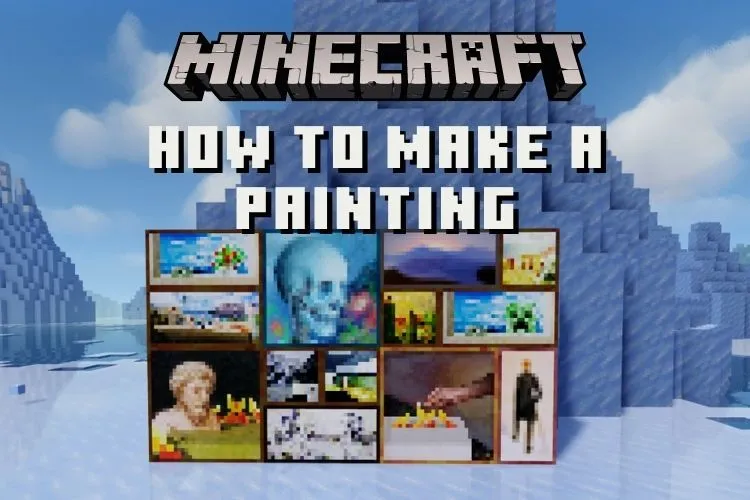
Sticks, wool and a little luck: paintings fill whatever wall space you offer them. How sizes work, how to re-roll the artwork, and the secret-door trick.
A painting is a decorative wall item crafted from sticks and wool that fills a random amount of space with one of the game's built-in artworks — you place it, and the game picks a picture that fits the gap you gave it. That gentle randomness is the whole charm: decorating with paintings is part curation, part lucky dip.
How do you craft a painting?
The recipe could hardly be cheaper: eight sticks forming a frame with a single block of wool in the middle. Any colour of wool works and makes no difference to the result. Given the price, there is no reason to be precious about paintings — craft a stack, decorate freely, and break and replace any picture that does not suit the room.
Paintings are items until placed, then entities once on the wall. That distinction explains most of their behaviour: they can be knocked off by impacts, they do not block light or movement, and other things can share their space in ways solid blocks cannot.
How do you control which painting you get?
You cannot pick a specific artwork directly, but you can control the size — and size narrows the field a lot. When you place a painting, it looks at the empty wall space available and chooses the largest fit it can, then picks a random picture of that size. A one-by-one gap only ever gives the small pictures; a wide, tall feature wall can give one of the big statement pieces.
The decorator's technique, then, is to shape the gap first. Outline the exact rectangle you want with blocks, place the painting, and if the artwork is wrong, break it and place it again — the picture re-rolls each time while the size stays fixed by your frame. Leave one spare painting in your inventory and any wall can be art-directed in under a minute.
What happens when a painting breaks?
Hit it, shoot it or let an explosion reach it and the painting pops off the wall as an item, ready to be picked up and placed again. Nothing is destroyed and nothing is lost, which makes paintings the lowest-stakes decoration in the game. They also fall if the wall behind them is removed, so demolish carefully if you want to keep your gallery.
Because paintings are entities, they behave oddly around other mechanics in useful ways. They can hide things: a painting placed over a doorway-sized hole makes a classic secret entrance you can simply walk through, since the painting itself has no collision. Whole generations of hidden bases owe their front doors to that trick.
Where do paintings work best?
Anywhere a flat wall looks unfinished — which is to say, most early bases. The small sizes suit corridors, stairwells and the wall above a bed or a row of furnaces. The medium pictures anchor living areas and libraries. The largest ones deserve a purpose-built wall: an entrance hall, a gallery room, or the blank end of a great hall where a single big piece does the work of a dozen decorations.
Paintings pair well with item frames rather than competing with them. Frames display your own trophies — a first diamond sword, a map of home — while paintings supply the artwork around them. A wall mixing both, with lighting kept soft, looks deliberately designed rather than accumulated.
How do you decorate a whole room around one painting?
Treat the biggest sizes as furniture, not garnish. Pick your wall, frame the space to force the size you want, re-roll until a piece lands that suits the room's palette, then build the rest of the décor to echo it — matching wood tones, a rug in similar colours, seating arranged to face it. A painting given that kind of respect stops looking like a random drop and starts looking like the room's centrepiece.
For a deliberate gallery feel, repeat the discipline: several medium paintings, same frame depth, even spacing, a bench down the middle. It is one of the cheapest impressive rooms you can build, because the artwork itself costs a stick-frame and a single block of wool each.
Any quirks worth knowing?
A few. Paintings can be placed on any solid face, including the sides of many blocks you might not expect, and several paintings can meet at corners to suggest a continuous gallery. Light does not affect the artwork's brightness as much as you'd expect, so pictures stay readable in moody, low-light rooms. And on multiplayer servers, remember paintings are easy to knock down — put the good ones out of arrow range of your friends' target practice.
Cheap, re-rollable and secretly useful for hidden doors, paintings remain the fastest way to turn a shelter into somewhere that looks lived in.
Frequently Asked Questions
How do you craft a painting in Minecraft?
Surround one block of wool with eight sticks in the crafting grid. The wool's colour does not matter, and every painting is identical as an item — the artwork is only chosen when you place it on a wall.
Can you choose which painting you get?
Not directly, but you can control the size by shaping the empty wall space before placing it. The game fills the largest rectangle it can and picks a random artwork of that size, so break and replace the painting to re-roll the picture within that size.
How do you make a secret door with a painting?
Make a doorway-sized hole in a wall, then place a painting large enough to cover it. Paintings have no collision, so you can walk straight through the artwork into the space behind while the wall looks solid.
Do paintings get destroyed when they break?
No. If a painting is hit, shot or caught in an explosion, it simply drops as an item and can be picked up and placed again. It also drops if the wall supporting it is removed.