Minecraft Potion of Healing: Instant Health, Explained and Brewed
The Potion of Healing restores health the instant you drink it — no eating, no hiding, no waiting. Learn how to brew it with a glistering melon slice, why glowstone beats redstone here, and when splash healing doubles as a weapon.
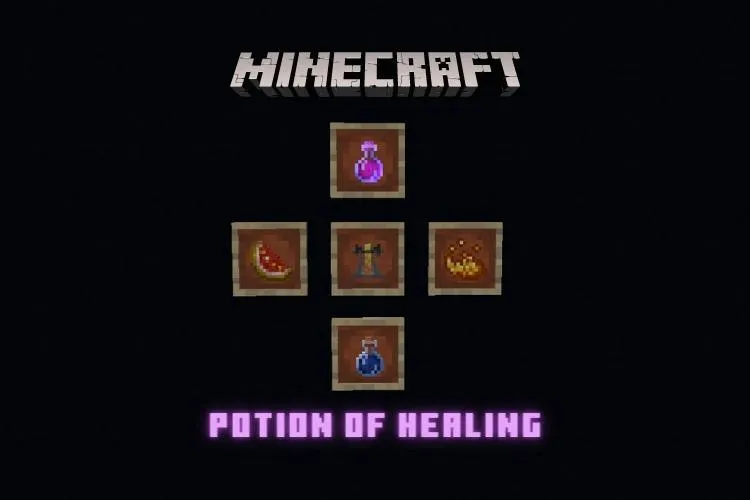
The Potion of Healing restores health the instant you drink it — no eating, no hiding, no waiting. Learn how to brew it with a glistering melon slice, why glowstone beats redstone here, and when splash healing doubles as a weapon.
Most healing in Minecraft is a waiting game — eat, hide, let hearts creep back. The Potion of Healing skips the wait: drink it and a chunk of health returns instantly, mid-fight, with no food and no retreat required. You brew it by adding a glistering melon slice to an awkward potion, and despite needing a little gold, it stays one of the best emergency items in the game.
How is instant healing different from eating or regenerating?
Food restores health indirectly and slowly, by filling your hunger bar and letting the game tick your hearts back. Regeneration potions also work over time. The Potion of Healing belongs to the Instant Health effect, which does exactly what the name suggests: the health arrives the moment the potion is used, all at once. That timing is the entire point. When a blaze volley or a point-blank creeper has just taken most of your health, you do not need healing over the next half minute — you need it before the next hit lands.
The flip side is that it is a single burst. It will not keep repairing you, so it works best as a rescue item: drink, get back to a survivable health level, then fall back on food and armour to finish the job.
How do you brew a Potion of Healing?
The base is the familiar awkward potion: water bottles in a brewing stand, blaze powder for fuel, nether wart as the first ingredient. Into that base goes the glistering melon slice, which is crafted by surrounding a melon slice with gold nuggets. One slice per brewing cycle treats up to three bottles at once, so the gold cost per potion is modest — a single gold ingot becomes eight nuggets, which is nearly three full brews' worth of ingredient.
Melons grow in jungles and occasionally in savanna villages, and once you have seeds you can farm them at home. In practice the setup cost is one fortress trip for wart and blaze rods, after which Healing potions are limited mostly by your gold supply.
Can you make it stronger, and does redstone help?
Healing has one meaningful upgrade and one common misunderstanding. The upgrade is glowstone dust, which turns the potion into Healing II and increases the size of the instant health burst. For a panic button, that stronger version is usually the one you want, because the whole reason to carry this potion is to recover as much health as possible in one action.
The misunderstanding is redstone. Extending a potion's duration does nothing for an effect that applies instantly — there is no duration to stretch. Redstone is not harmful, it is simply wasted on this recipe. Save your dust for potions that actually tick over time.
When should you drink one instead of eating?
- During boss fights, when stepping away to eat would leave you exposed to the dragon's breath or the Wither's skulls.
- Deep in a cave or fortress at low health, surrounded, with no safe corner to recover in.
- After a fall or lava accident in the Nether, where getting to safety takes longer than the damage allows.
- In hardcore mode, where a single death ends the world and a fast rescue is worth any ingredient cost.
Outside genuine emergencies, golden carrots, steak and suspicious stews are cheaper healing per minute. The potion is insurance: expensive per use, but it pays out in the exact seconds when nothing else can help you.
Why do players throw healing potions instead of drinking them?
Brewing gunpowder into a Potion of Healing makes a splash version, and splash healing has two clever uses. The first is speed: throwing a bottle at your own feet heals you without the drinking animation, which is a heartbeat faster under pressure, and it can heal nearby friends at the same time. The second is offence. Undead mobs — zombies, skeletons, wither skeletons and the Wither itself — are harmed by healing effects, so a splash Potion of Healing thrown into a skeleton pack is effectively a small grenade — one of the few potions that doubles as a weapon.
Lingering versions, made by adding dragon's breath to a splash potion, leave a healing cloud behind, which sees niche use in team fights and mob farms built around undead damage. For most players, though, the drinkable Healing II in a hotbar slot is the classic, and it has saved more hardcore worlds than any other bottle in the game.
Frequently Asked Questions
What ingredient brews a Potion of Healing in Minecraft?
A glistering melon slice, crafted from a melon slice surrounded by gold nuggets. Brew it into an awkward potion (water bottles plus nether wart) to get a Potion of Healing.
Does redstone make a Potion of Healing last longer?
No. Healing applies instantly, so there is no duration for redstone to extend. Use glowstone dust instead — it upgrades the potion to Healing II, which restores more health in one burst.
Can a Potion of Healing hurt mobs?
Yes, if they are undead. Splash Potions of Healing damage zombies, skeletons, wither skeletons and the Wither, because healing effects harm undead creatures. The same splash will heal you and your teammates.
How many Potions of Healing does one glistering melon slice make?
Up to three. A brewing stand treats three bottles with a single ingredient, so one glistering melon slice can produce three potions at once.