Minecraft Slimes: Spawning, Splitting and Slimeballs
Where slimes appear in swamps and slime chunks, why they split as you fight them, and how slimeballs unlock sticky pistons, leads, magma cream and bouncing slime blocks.
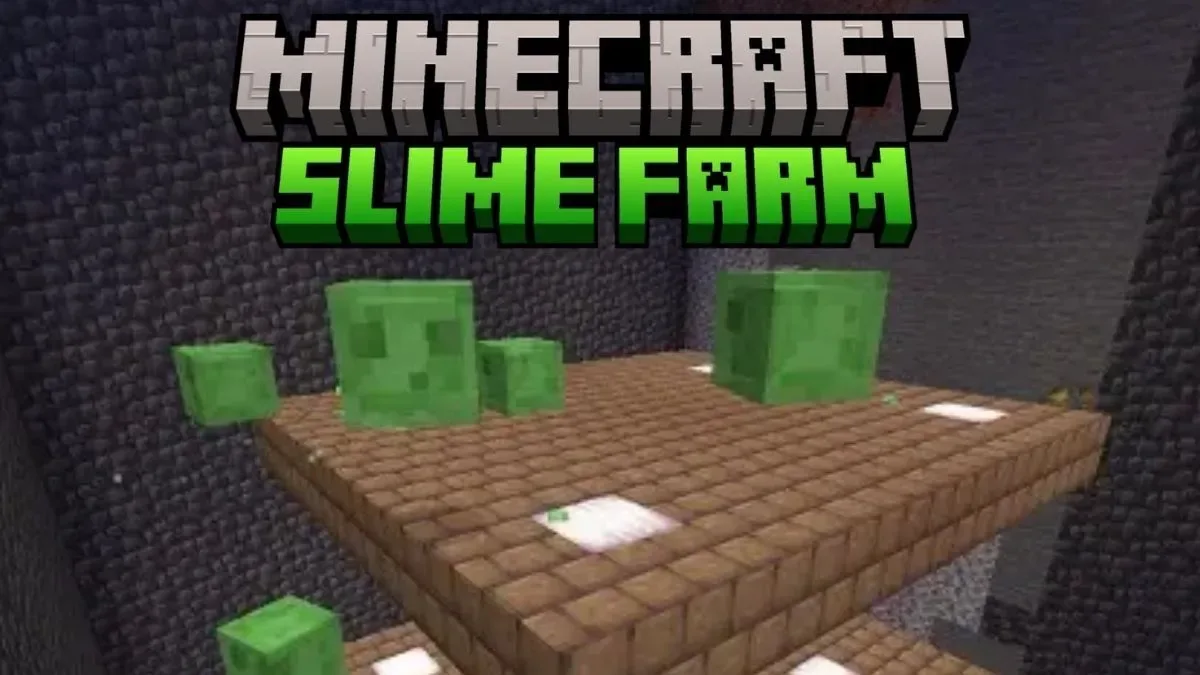
Where slimes appear in swamps and slime chunks, why they split as you fight them, and how slimeballs unlock sticky pistons, leads, magma cream and bouncing slime blocks.
A slime is a hopping cube of living gel that appears in swamps and in certain underground areas. Kill a large one and it divides into smaller slimes; finish those off and you can collect slimeballs, the springy ingredient behind sticky pistons, leads and slime blocks.
Where do slimes spawn?
On the surface, look in a swamp at night. The fuller the moon, the more encouraging the conditions become in Java, while swamp spawning details and light requirements are not handled identically in Bedrock. Slimes need room to hop and will not provide a reliable harvest from one brief visit. Clear a flat patch, light the surrounding land if you want spawns concentrated in the swamp, and give the area time to work.
Underground slimes follow a different rule. Particular vertical columns of the world, known as slime chunks, can produce them deep below the surface even outside a swamp. A large, flat room in one of these chunks may turn an apparently empty mining session into a noisy one. Chunk locations depend on the edition and, in Java, on the world seed, so a finder or map for one world should not be assumed to fit another.
Why do slimes keep splitting?
Size is both the slime's weapon and its weakness. A big slime can hurt when it lands on you, and its broad body is difficult to ignore in a confined room. When it dies, it breaks into medium slimes; medium ones produce small slimes. The smallest size cannot damage you, although it can still bump into you and become a nuisance while something more dangerous is nearby.
The splitting changes how you should fight. Sweeping attacks are useful because the new cubes appear close together, but rushing into the middle of a large group invites repeated knocks from several directions. Keep a wall or open space behind you, deal with the largest targets first, and do not let the little ones push you towards lava or a ravine. A slime's damage comes from contact, not from spitting or ranged attacks, so distance solves most of the problem.
What are slimeballs used for?
Slimeballs are the reason players go looking for a creature that otherwise offers little reward. Their main uses include:
- Combining one with a piston to make a sticky piston.
- Crafting leads for guiding animals.
- Making magma cream.
- Combining nine slimeballs into a slime block.
That short list explains their value. Sticky pistons pull blocks back as well as push them, opening the door to hidden entrances, flying machines and compact farms. Leads solve everyday animal handling. Slime blocks bounce creatures and items, interact distinctively with pistons and can prevent an ordinary hard landing when used correctly. If redstone is part of your plans, a modest slimeball reserve soon starts to feel essential.
How is a slime block different?
A slime block turns the creature's bounce into a building material. Land on it from a height and you rebound instead of taking the landing as a normal solid block would deliver it. Crouching changes that behaviour when you need to step onto one safely. Slime blocks can also move neighbouring blocks when pushed or pulled by pistons, which is why flying-machine designs treat them almost like glue.
They are not a decoration to place carelessly around machinery. A slime block may carry blocks beside it that plain pistons would leave behind, and honey blocks behave differently despite their similar sticky reputation: the two do not stick to each other. Test a mechanism before surrounding it with valuable equipment. Many broken contraptions are not badly designed; they simply gained an unwanted passenger because a slime block touched the wrong surface.
Can you farm slimes efficiently?
Yes, but location does most of the work. An underground farm needs a confirmed slime chunk, several open spawning floors and a way to move the cubes towards a controlled killing area. A swamp farm relies on surface space, the time of night and, depending on edition, the moon. Both designs suffer when nearby caves or land offer competing places for monsters to appear, so spawn-proofing the surroundings often improves rates more than making the farm taller.
Start small before excavating a giant chamber. Spend a few nights in a swamp to learn whether slimes appear regularly, and test an underground room before committing to a full build. Once you know the spot is productive, the rest is routine: widen the floors, light every unrelated tunnel you can reach, and collect the slimeballs somewhere safe. A reliable supply quickly repays the digging.
Frequently Asked Questions
Where can you find slimes in Minecraft?
Look in swamps at night or deep underground in slime chunks. Surface spawning is influenced by the night and moon, while underground spawning depends on being in the right chunk.
Why do slimes split when killed?
Large slimes divide into medium ones, and medium slimes divide into small ones. The smallest slimes cannot damage you, although they can still bump into you.
What is the most important use for slimeballs?
Sticky pistons are the standout use, but slimeballs also make leads, magma cream and slime blocks. Nine slimeballs can be combined into one slime block.
Are slime chunks the same in every world?
Not necessarily. Java chunk locations depend on the world seed, and Bedrock handles chunk placement differently, so use a finder or test area for your exact edition and world.