Wordle Hard Mode Explained: One Rule, Real Consequences
One rule changes everything: revealed hints must be reused. What Hard Mode really enforces, what it ignores, how it moves your scores and who it suits.
One rule changes everything: revealed hints must be reused. What Hard Mode really enforces, what it ignores, how it moves your scores and who it suits.
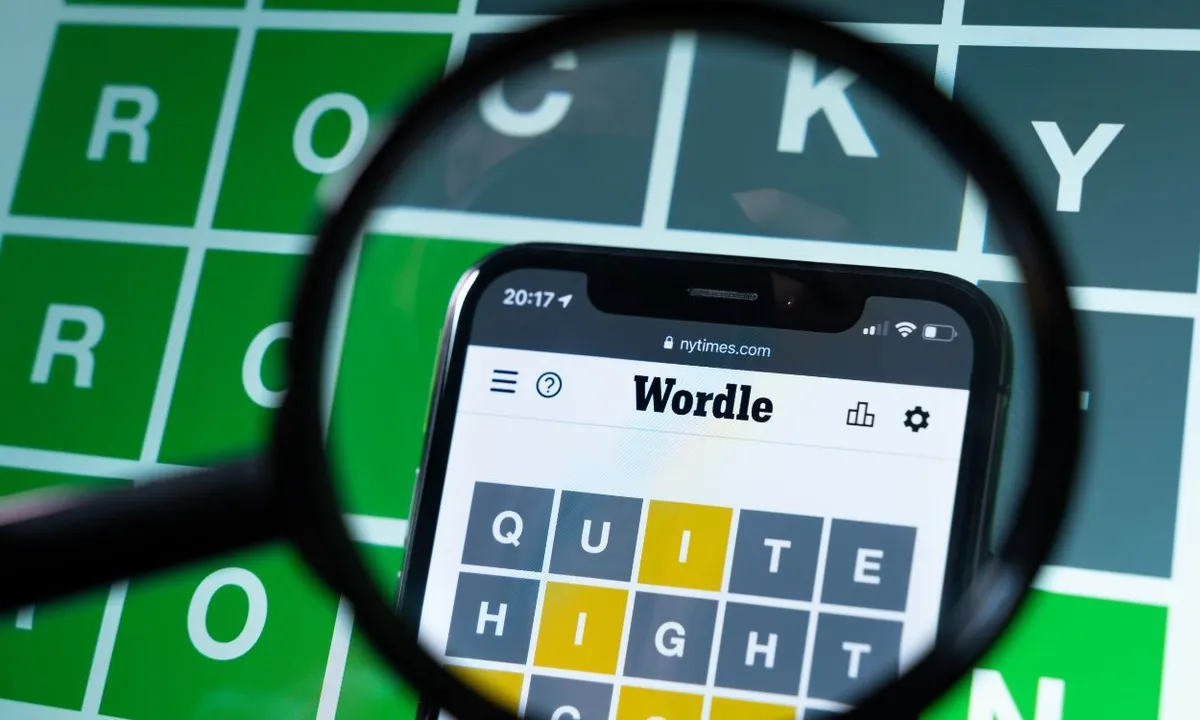
Hard Mode is an optional Wordle setting with one rule, stated in the game itself: any revealed hints must be used in subsequent guesses. Turn it on using the settings cog, and from then on the game refuses guesses that ignore what you have already discovered. Your shared result gains a small asterisk beside the score, a quiet badge that the puzzle was played the strict way.
What exactly does Hard Mode force you to do?
Two obligations, and only two. Any letter that has turned green must stay in exactly the same position in every later guess. Any letter that has turned yellow must appear somewhere in every later guess. Try to submit a word that breaks either condition and the game rejects it with a message telling you which letter has to be used. Nothing else changes: you still get six guesses, the colours work identically, and the answer is the same one normal-mode players are chasing.
Just as important is what the rule does not enforce. Grey letters are not banned; the game will happily let you replay a letter already shown to be absent, which almost always wastes a slot but breaks no rule. Yellow letters must be included, but the game does not force you to move them to a new position, even though leaving one where it turned yellow cannot be right. And Hard Mode says nothing about counts: if a letter appeared twice in your guesses and lit up once, the setting will not stop you chasing a phantom second copy. It polices presence and position only.
How does it change your scores in practice?
For disciplined players, surprisingly little, because good normal-mode play already reuses greens and usually honours yellows. If your ordinary game never wastes a row, Hard Mode mostly removes your safety valve rather than your habits. Averages across the player base reflect that: the mode is not some separate league of difficulty, and plenty of long streaks live inside it. Research simulations of strict play likewise find the large majority of puzzles still solve within six, with failure rates in the low single digits.
Where the score moves is at the margins, in both directions. The setting quietly improves some players by banning their worst habit: the lazy fourth guess that ignores two known letters. It saves them from themselves. For stronger players it does the opposite. It removes the occasional deliberate sacrifice, the guess played purely for information, and turns a few specific bad boards into guaranteed losses that normal mode would have rescued.
When does Hard Mode actually trap you?
The trap is the one-letter family. Suppose _IGHT comes up green in the last four slots with FIGHT, LIGHT, MIGHT, NIGHT and RIGHT all still possible. In normal mode you can spend one guess on a probe word testing several opening letters at once and then take the answer home. In Hard Mode every guess must contain I, G, H and T in place, so the probe is illegal. Your only legal moves are family members themselves, one coin flip per row, and if the right sibling sits fifth in line and you have three rows, the streak dies through no fault of your reading.
Double letters create a subtler version of the same squeeze. Because the setting does not police counts, a yellow letter you are forced to include may already be fully accounted for elsewhere, clogging rows with a letter you would rather drop. Experienced Hard Mode players adapt by choosing openers and second guesses that spread risk across different word families, so the board is less likely to collapse into a single pattern too early.
Who should turn Hard Mode on?
Turn it on if you enjoy the purer puzzle: every guess a genuine candidate, every row committed, no information bought with throws. It suits players whose streaks die through carelessness, because it makes the commonest careless errors impossible. Leave it off if your favourite part of Wordle is the clever sacrifice, or if a streak matters more to you than the manner of keeping it, because Hard Mode will eventually present a family trap that no amount of skill can talk its way out of. Neither choice is the correct one. It is a preference about what kind of difficulty you want: discipline imposed from outside, or freedom with all its temptations intact.
Frequently Asked Questions
What is the exact Hard Mode rule?
Any revealed hints must be used in subsequent guesses. Green letters must stay in the same position, and yellow letters must be included in every later guess, or the game rejects the word.
Does Hard Mode ban grey letters?
No. Hard Mode only enforces the positive clues. Replaying a grey letter is legal, though almost always wasteful, and the game will not stop you doing it.
Why is Hard Mode dangerous in _IGHT-style traps?
Because every guess must contain the confirmed pattern, you cannot play a probe word to test several possible first letters. You are reduced to guessing family members one by one, which can run out of rows.
Does Hard Mode make scores much worse?
For careful players, barely. It removes lazy guesses that ignore known letters, which helps some people, but it also removes the sacrificial probe guess, which turns a small number of boards into unavoidable losses.