Minecraft Elytra: Finding, Flying and Repairing the Wings
Where the elytra hides in End ships, how to glide and boost with rockets without blowing yourself up, and how to keep the wings repaired.
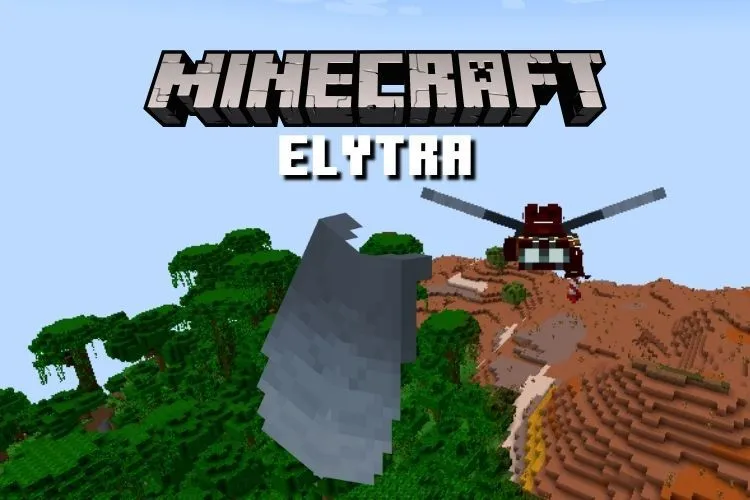
Where the elytra hides in End ships, how to glide and boost with rockets without blowing yourself up, and how to keep the wings repaired.
An elytra is a pair of wings worn in the chestplate slot that lets you glide from any height and, with firework rockets, fly freely across the world. It cannot be crafted — the only source is an End ship, the floating vessel that sometimes generates beside an End city, where one elytra hangs in an item frame in the ship's hold.
How do you reach an End ship?
End cities generate on the outer islands of the End, beyond the main island where the dragon fight happens. After defeating the ender dragon, small gateway portals appear around the main island; throwing an ender pearl through one teleports you out to the scattered islands. From there it is exploration: bridging or pearling between islands, watching the horizon for the tall, branching purpur towers of a city.
Not every city has a ship. The vessel floats a short distance from one of the city's towers when it does generate, connected by nothing — you bridge or pearl across to its deck. Inside, expect shulkers guarding the approach and the treasure room, plus a brewing stand with healing potions and loot chests. The elytra itself sits in an item frame flanked by chests, above a shulker that is very good at ruining celebrations. Levitation from a shulker shell is no disaster here, at least; floating near a ship is one of the safer places in the End for it to happen, but watch the fall when the effect ends.
How does gliding actually work?
Jump from a height and press jump again in mid-air to spread the wings. Your direction of travel follows where you look: gaze slightly below the horizon to hold a steady glide, look further down to dive and build speed, and pitch up to trade that speed back for height. Skilled flyers porpoise — dive, climb, dive, climb — stretching a single launch across surprising distances without any rockets at all.
Landing is about flattening out. Level your view near the ground to bleed speed, because arriving face-first at full dive velocity hurts exactly as much as falling the equivalent distance. Gliding into water, onto a slime block or through a powdered-snow patch all make forgiving practice landings. The wings occupy your chestplate slot, so every flight is a choice to travel with less armour — a real consideration in dangerous territory, and the reason many players keep the chestplate in their hotbar for a quick swap on landing.
How do firework rockets change things?
Using a firework rocket while gliding boosts you in the direction you are facing, turning the elytra from a glider into genuine flight. Plain rockets — paper and gunpowder, with no firework star — are the right tool: rockets crafted with a star explode at the end of their boost and damage you, mid-air, in your unarmoured chest slot. Flight duration on the rocket controls boost length, so longer-duration rockets suit cross-country travel.
With a stack of plain rockets and a good launch point, you can cross thousands of blocks, scout for villages, structures and biomes from above, and turn the late game into a world that feels a tenth of its former size. Take spare rockets, watch your altitude over oceans, and remember that chunks load as fast as you cross them — flying low and fast over unexplored land can outpace your world's generation briefly.
How do you repair an elytra before it gives out?
Gliding drains durability, and a worn-out elytra does not shatter — it drops to a damaged state with a tattered texture and simply stops working until repaired, so your one irreplaceable item is never deleted by carelessness. The warning sign is the durability bar; check it on long flights the way you would check fuel.
Phantom membranes repair an elytra at an anvil, each restoring a portion of its durability — phantoms spawn at night after several in-game days without sleep, so membrane farming is its own small expedition. Two elytra can also be combined, but the smarter long-term answer is enchantments: Unbreaking stretches every flight considerably, and Mending, fed by experience orbs, quietly tops the wings up as you play. A Mending elytra repaired as you go can serve for years of in-game travel. Note that anvil repairs grow more expensive with each round — another argument for Mending over membranes once you can get it.
What catches new flyers out?
Trees, mostly — and cliff faces, tower walls and the ground itself, all met at speed while looking the wrong way. Flight feels safe until the first face-first arrival. Practise over water, keep your first dives gentle, and resist firing a rocket while aimed at a mountainside. Also practise where you can afford the walk back: gliding is strictly one-directional transport until rockets are involved, and a beginner's glide from a nether fortress roof can end a very long way from the portal.
Frequently Asked Questions
Can you craft an elytra in Minecraft?
No, an elytra cannot be crafted. You find one in an item frame inside an End ship, the vessel that sometimes generates next to an End city.
What happens when an elytra runs out of durability?
It does not break or disappear. It becomes damaged and stops working until you repair it with phantom membranes at an anvil or through the Mending enchantment.
Why did my firework rocket hurt me while flying?
Rockets crafted with a firework star explode at the end of the boost and damage you. Use plain rockets made only from paper and gunpowder for safe elytra flight.
Can you wear a chestplate and an elytra at the same time?
No. The elytra occupies the chestplate slot, so flying means giving up that armour piece until you land and swap back.