Minecraft Nether Portals: Building, Linking and Fast Travel Explained
How to build and light a Nether portal, how the eight-to-one travel ratio works, and how to fix portals that keep linking to the wrong place.
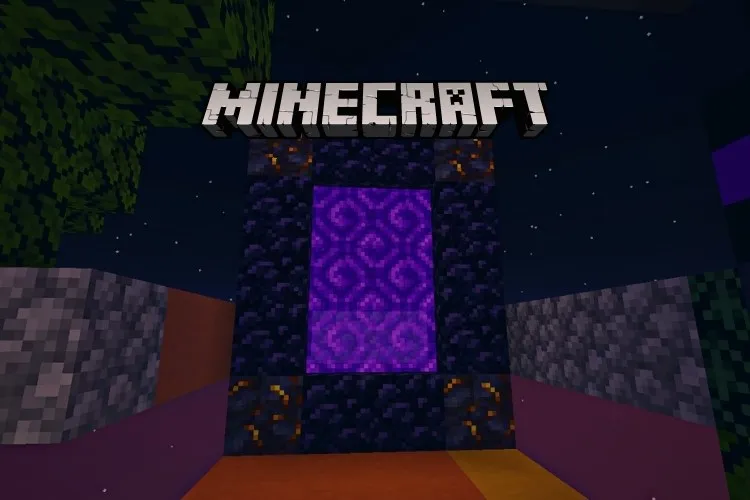
How to build and light a Nether portal, how the eight-to-one travel ratio works, and how to fix portals that keep linking to the wrong place.
A Nether portal is the doorway between the Overworld and the Nether, built from an obsidian frame and lit from inside. Step into the purple field, wait a few moments, and you emerge in the other dimension at a linked portal — or a newly generated one if none exists nearby. It is the single most important structure for fast travel in a long-term Minecraft world.
How do you build a Nether portal frame?
The standard portal needs an upright rectangular frame of obsidian with an empty opening at least two blocks wide and three blocks tall. The cheapest version uses ten obsidian blocks because the four corners can be left out or filled with any temporary block — only the sides, top and bottom edges of the opening need to be obsidian. A frame with corners included takes fourteen blocks and looks tidier, but it works no better.
Obsidian comes from pouring water over still lava, then mining the result with a diamond or netherite pickaxe. Nothing weaker will collect the block rather than destroying it. If you are short on diamonds, you can also cast the frame in place: pour lava and water bucket by bucket into a mould of dirt or cobblestone, forming each obsidian block exactly where the frame needs it. Portals can be built much larger than the minimum, up to a generous maximum size, which suits grand entrances and flying through on an elytra.
How do you light a portal, and why won't yours ignite?
Clicking the inside of the frame with flint and steel is the usual method. A fire charge works too, and a well-aimed blaze charge, a lightning strike or spreading fire next to the frame can occasionally do the job. When it works, the whole opening fills with the swirling purple portal blocks at once.
Failed portals almost always trace back to the frame itself. Check that every block around the opening is ordinary obsidian — crying obsidian, the weeping variant from ruined portals and bartering, cannot be used in a portal frame at all. Check the opening is a proper rectangle with no stray blocks inside it, and that you clicked the inner face of a bottom obsidian block rather than the ground in front. In the End, portals cannot be lit at all, which is worth remembering before you carry obsidian through an End gateway.
How does portal travel distance actually work?
Horizontal distance in the Nether is compressed: travelling one block there covers the same ground as eight blocks in the Overworld. That is the whole secret behind Nether highways. Walk a hundred blocks through the Nether, step through another portal, and you come out roughly eight hundred blocks from where you started. Height does not scale — your vertical position carries across much more directly — so portal maths only needs the X and Z coordinates.
To place a return portal precisely, stand where you want the Overworld exit, divide both horizontal coordinates by eight, and build the Nether-side portal at those numbers. The game searches around the matching point in the other dimension and uses the closest active portal it finds, which is why rough placement usually works and why two portals built carelessly close together can end up sharing one exit.
What happens if your portals link up wrong?
The classic symptom is a one-way trip: your base portal takes you to the Nether correctly, but the return journey drops you at a new portal in a cave or on a hillside some distance from home. This happens when the Nether-side portal sits too far from the exact converted coordinates, so the game generated a fresh Overworld portal within its search range rather than reusing yours.
The fix is to move the Nether-side portal, not the Overworld one. Note your Overworld portal's coordinates, divide by eight, then destroy the misplaced Nether portal and rebuild it at the converted spot. Light it, step through, and you should arrive home. Because ghasts can extinguish a portal with a fireball — and because a dark, broken frame in the Nether is a miserable discovery — many players protect the Nether side with a small cobblestone room, since cobblestone resists ghast blasts.
What should you know before your first trip through?
The portal takes a few seconds to transfer you, and that delay matters: you stand vulnerable, screen swirling, while anything nearby can hit you and knock you out of the frame. Clear the area before stepping in, and on the far side, pause before moving — the Nether generates around your arrival portal, which may sit on a narrow ledge above a lava lake. Screenshot your coordinates the moment you arrive.
Portals also move more than players. Villagers, animals, items and minecarts can pass through, and hostile mobs occasionally wander into the Overworld, so fencing your home portal is a small job that prevents large surprises. Finally, zombie piglins can spawn at Overworld portals in proportion to their size — one more reason the huge decorative portal above your base deserves a door.
Frequently Asked Questions
What is the smallest Nether portal you can build?
A portal needs an opening at least two blocks wide and three blocks tall. Leaving out the corners, the frame takes ten obsidian blocks in total.
Why won't my portal light with flint and steel?
The usual causes are crying obsidian in the frame, a block inside the opening, or a frame that is not a complete rectangle. Ordinary obsidian and a clear opening will fix it.
How does the eight-to-one travel ratio work?
One block travelled in the Nether equals eight blocks in the Overworld horizontally. Divide your Overworld X and Z coordinates by eight to find where the matching Nether portal belongs.
Can mobs and items travel through a Nether portal?
Yes. Villagers, animals, hostile mobs, items and minecarts can all pass through, so an unfenced home portal can deliver unwelcome visitors.