Minecraft Pumpkins: How to Grow and Farm Them
Pumpkins fruit beside their stem, never on it — and that quirk shapes everything from a hand patch to a fully automatic observer farm. Here is how to grow them well.
Pumpkins fruit beside their stem, never on it — and that quirk shapes everything from a hand patch to a fully automatic observer farm. Here is how to grow them well.
A pumpkin grows from a stem that puts its fruit on a neighbouring block rather than on the vine itself, and understanding that one habit explains everything about farming them well — from spacing a manual patch to building the observer-and-piston plots that harvest automatically. Get the layout right and pumpkins become an easy, endless supply for pies, jack o'lanterns, golems and villager trading.
How do pumpkins actually grow?
You plant pumpkin seeds on farmland, and the seed grows through stem stages much like wheat, though it needs no water directly beneath it to survive — nearby water simply keeps the farmland hydrated and speeds things along. Once the stem matures, it periodically grows a pumpkin on an adjacent empty block of dirt, grass or farmland. Harvesting the pumpkin leaves the stem alive and ready to fruit again, so a pumpkin patch is never replanted: clear the fruit, and the same stems keep producing for as long as you keep collecting.
How should you lay out a manual pumpkin patch?
Alternate rows of stems with rows of fruiting ground: one row of planted farmland, one row of bare dirt or grass for the pumpkins to appear on, then repeat. Every stem then has a clear neighbour reserved for its fruit, and the fruit never wastes a growth attempt landing on a block it cannot use. Keep the patch lit and fenced — not because pumpkins need light to fruit, though light does help them grow, but because a wandering creeper treats a tidy farm as a personal insult. A patch of sixteen stems already out-produces most players' pie and lantern needs.
How do automatic pumpkin farms work?
The automatic version watches the fruiting spot instead of the plant. Each stem faces a single dirt block, and an observer keeps an eye on that block: the moment a pumpkin appears there, the observer's pulse drives a piston that shoves or breaks the pumpkin, and the item drops into a hopper or a collection stream below or beside the plot. Because the stem itself is never touched, it starts growing the next pumpkin immediately. These modules tile neatly in rows, and some designs use mud or hoppers beneath the fruiting block so the harvested pumpkin falls straight into storage with no stream at all.
What are pumpkins actually used for?
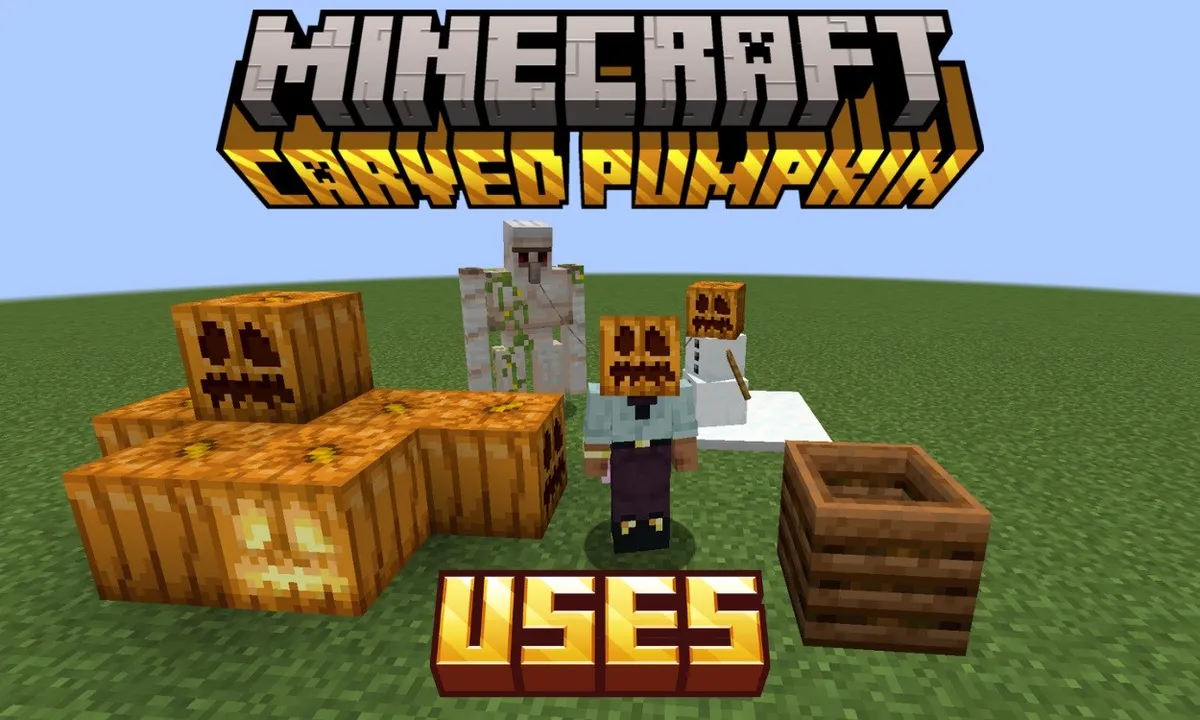
More than their Halloween reputation suggests. Carve one with shears and add a torch and you have a jack o'lantern — one of the game's best light sources, safe underwater and immune to melting or being knocked off like torches. Carved pumpkins are also the head of both snow golems and iron golems, and wearing one lets you look at endermen without provoking them, which makes early End trips noticeably calmer. In the kitchen they become pumpkin pie, a reliable food, and farmer villagers will buy spare pumpkins, turning an automatic farm into a modest emerald income as well.
Do pumpkins and melons farm the same way?
Almost identically, and most automatic designs handle both by swapping the seed type. The growing habit — stem, adjacent fruiting block, endless regrowth — is shared, which is why so many farm builds are advertised as melon and pumpkin farms in one. The differences are in the harvest: a pumpkin drops as a whole block, while a melon shatters into slices unless your tool carries Silk Touch. Melons also feature in brewing through glistering melon slices, whereas pumpkins lean towards food, light and golems. Many players build one combined farm with a row of each.
Can you move a pumpkin patch once it is planted?
Not the stems themselves — breaking a stem destroys it, and there is no way to pick one up and replant it elsewhere. What you can do is start the new patch first, since seeds are easy to come by: every pumpkin breaks down into seeds, so one harvest from the old patch funds a much larger new one. Build the replacement, let it reach maturity, and only then clear the original ground. That order of operations means your pie supply never has a gap, and the whole move costs nothing but a little patience.
Why is your pumpkin stem not producing?
Work through the usual suspects. The stem needs an adjacent block it can fruit onto — dirt, grass, farmland or similar — and that block must be empty, with air above it. If every neighbour is farmland planted with other crops, slabs, or the patch's own walkways, the stem simply waits. Growth also runs on random ticks, so the patch must be in loaded chunks while you are nearby, and very young stems need time to mature before their first fruit. Patience plus one clear dirt block solves nearly every case.
Frequently Asked Questions
How long does a pumpkin take to grow in Minecraft?
It varies, because both stem growth and fruiting run on random ticks — a mature stem produces a pumpkin every so often while you are nearby, but there is no fixed timer. Hydrated farmland and good light keep the patch at its most productive.
Can you bonemeal pumpkin stems?
Bonemeal speeds a young stem to maturity, but it cannot force a mature stem to produce a pumpkin on demand. Once the stem is grown, only time and a clear adjacent block will bring the next fruit.
How do you make an automatic pumpkin farm?
Give each stem one reserved dirt block to fruit onto, watch that block with an observer, and let the observer fire a piston that breaks the pumpkin the moment it appears. A hopper or collection stream underneath gathers the drops.
What is the difference between pumpkin and melon farming?
The farms are near-identical, since both grow from stems onto adjacent blocks. The harvest differs: pumpkins drop whole, while melons break into slices unless mined with a Silk Touch tool.