Pokémon GO Dynamax and Gigantamax: Max Battles Explained
Max Battles run on Power Spots, Max Particles and three-turn transformations. Here is how they work, what they cost, and how Gigantamax differs from ordinary Dynamax.
Max Battles run on Power Spots, Max Particles and three-turn transformations. Here is how they work, what they cost, and how Gigantamax differs from ordinary Dynamax.
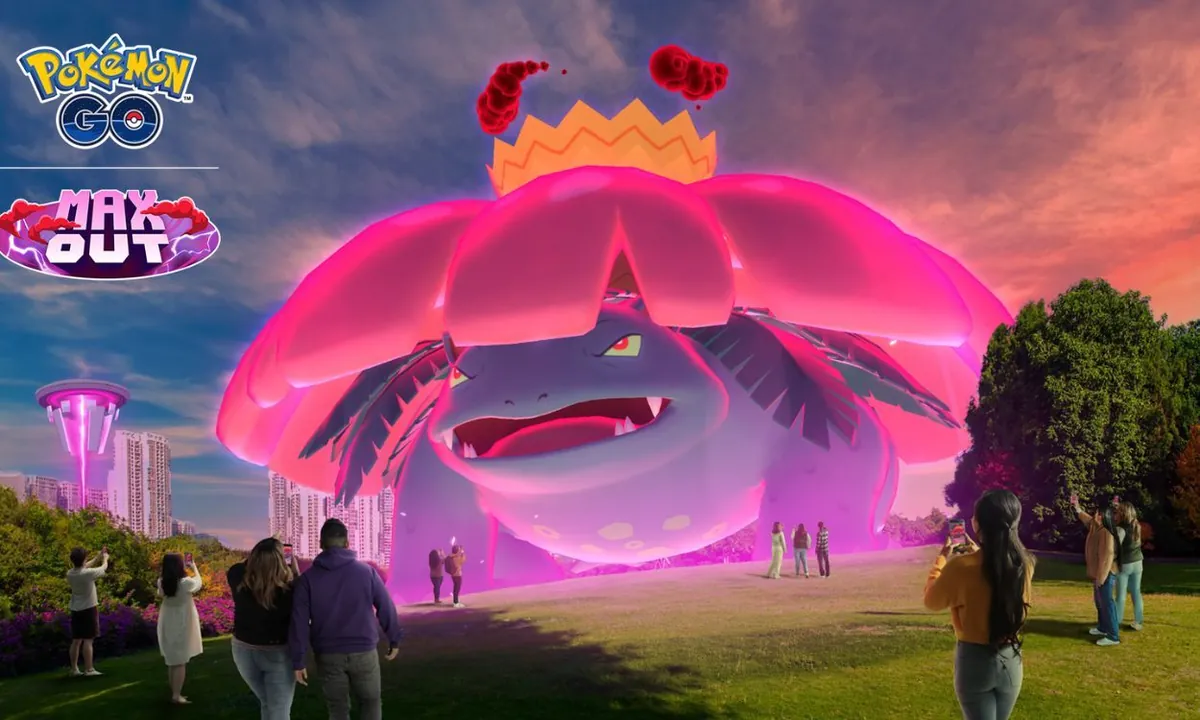
Dynamax and Gigantamax battles are Pokémon GO's second battle system, running alongside raids but with its own locations, currency and rules. You fight giant bosses at temporary Power Spots using only Dynamax-capable Pokémon, spend a resource called Max Particles to enter and to train special Max Moves, and catch the boss afterwards. Gigantamax is the rarer, harder version of the same idea: the Pokémon changes shape, gains a unique attack, and needs a crowd to bring down.
Where do Max Battles happen, and who can take part?
Max Battles take place at Power Spots, the glowing purple platforms that appear and disappear on the map over a few days. They are not Gyms, and a spot that hosts a battle today may be gone next week. The Power Spot tab in the Nearby menu is the practical tool here: it lists the boss at each nearby spot, its star difficulty and how long the spot will stay active. Battles generally run during daytime hours, roughly 6 a.m. to 9 p.m. local time.
Only Dynamax and Gigantamax Pokémon can fight in a Max Battle. An ordinary Pokémon, however strong, is turned away, which catches new players out constantly. You build your collection by winning Max Battles and catching the boss, and the "To the Max!" Special Research gives you your first Dynamax Pokémon to get started. Each Trainer brings a team of three, and up to four Trainers battle together in a group. Six-star Gigantamax battles scale up much further: as many as 100 Trainers can join a single lobby, split into groups of four. Since May 2025 you can also join remotely with a Remote Raid Pass, which is consumed when the battle starts.
What is the difference between Dynamax and Gigantamax?
Every Dynamax-capable Pokémon can Dynamax. In battle it grows enormous for three turns once your Max Meter is full, and its attacks become Max Moves. The Max Attack's type follows the Pokémon's Fast Attack type, so choosing the right Fast Attack is how you aim your damage at the boss's weakness. Alongside it sit two support moves: Max Guard, which raises shields that soak damage, and Max Spirit, which heals your whole group's Pokémon. All three can be unlocked and levelled up outside battle using Max Particles and Candy, and a well-timed Guard or Spirit is often what carries a group through a hard fight.
Gigantamax is a special form limited to certain species. A Gigantamax Pokémon does not just grow; it changes appearance completely, and its Max Attack is replaced by a unique G-Max Move with a fixed type of its own, regardless of the Fast Attack it knows. Gigantamax Pokémon are only found in six-star Max Battles, which are deliberately tuned for big turnouts rather than a single team of four.
How do Max Particles work?
Max Particles are the currency for the whole system. You collect them by interacting with Power Spots, which give 100 particles per visit plus a small first-visit bonus, and by walking: every 2 km earns 300 particles, claimed from the Power Spot tab in Nearby, with Adventure Sync distance counting too. Outside events you can collect up to 800 particles a day and hold at most 1,500 at once, so a full bag quietly wastes anything further you would have earned.
Entry prices scale with the boss. Community trackers consistently record one-star battles at 250 particles, three-star at 400, and five-star Legendary and six-star Gigantamax battles at 800. The friendly catch is that particles are only deducted when your group wins. Losing costs you nothing in particles, so attempting a hard boss with a new team is risk-free in that sense. Event days often raise the daily collection limit, sometimes doubling it to 1,600, which is when serious Gigantamax sessions happen.
What actually happens inside a Max Battle?
Attack as normal and your Max Meter fills as the fight goes on, faster when your team is dealing damage. When it peaks, your Pokémon Dynamaxes for three turns, and those three Max Moves are your window to do the real work: hammer the boss, shield before a big hit, or heal the group. When the form ends, the meter resets and you build it again. If your team faints, you are not useless — fainted Trainers can cheer, which charges the group's meter faster. Win, and you get the chance to catch the boss, which joins your collection as a Dynamax or Gigantamax Pokémon ready for the next battle.
Frequently Asked Questions
Can any Pokémon enter a Max Battle?
No. Only Pokémon that can Dynamax or Gigantamax are eligible, and ordinary catches cannot be converted. You get your first from the 'To the Max!' Special Research, then grow your roster by catching Max Battle bosses.
Do I lose my Max Particles if I lose a Max Battle?
No. Particles are only deducted when your group defeats the boss, so failed attempts cost nothing in particles. A Remote Raid Pass used to join remotely is consumed when the battle starts, though.
How many Max Particles can I collect each day?
Up to 800 per day from Power Spots and walking outside events, and you can hold 1,500 at once. Event days such as Max Battle Days often raise the collection limit to 1,600.
What is the difference between Dynamax and Gigantamax?
Any Dynamax-capable Pokémon can Dynamax, growing larger and using Max Moves based on its Fast Attack type. Gigantamax is limited to certain species: the Pokémon changes shape and uses a unique G-Max Move instead, and it appears only in six-star battles built for up to 100 Trainers.