Minecraft Wither Skeleton Farm Guide: Skulls for Your Beacon
Wither skeleton farms explained: crossroads platforms in nether fortresses, wither roses that filter out other mobs, spawn-proofing, and farming skulls for a beacon.
Wither skeleton farms explained: crossroads platforms in nether fortresses, wither roses that filter out other mobs, spawn-proofing, and farming skulls for a beacon.
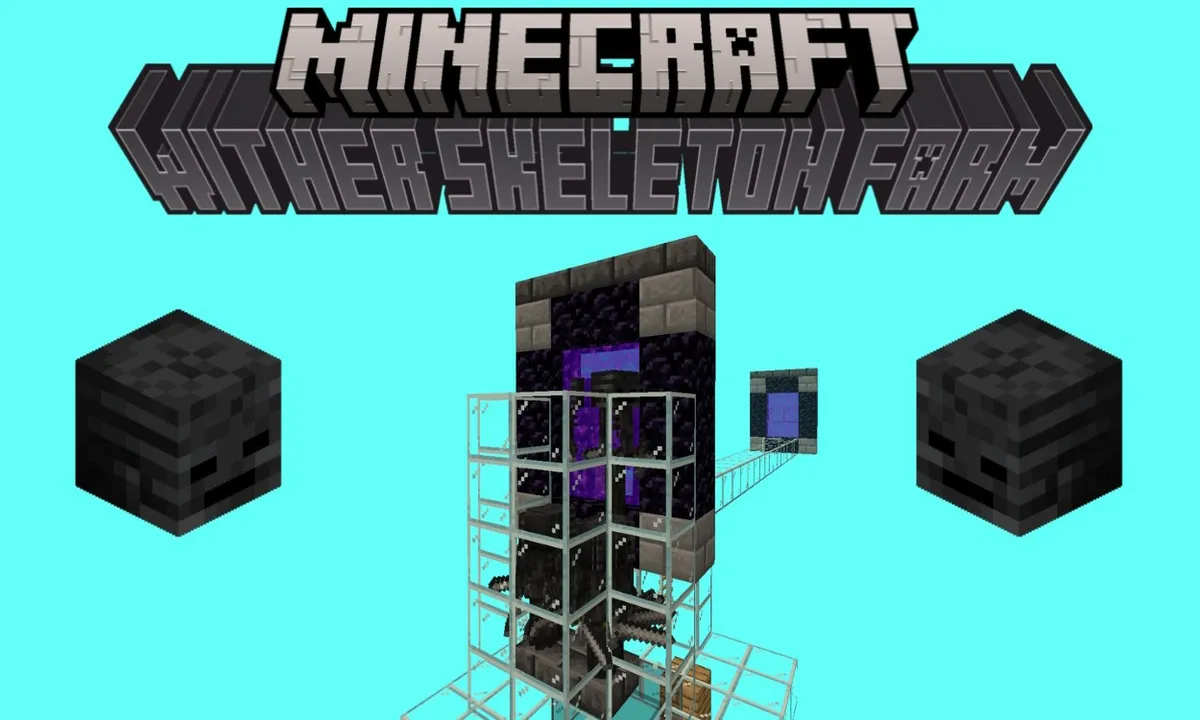
A wither skeleton farm produces the three wither skeleton skulls you need to summon the Wither — and therefore to earn a beacon — along with coal, bones and a trickle of stone swords. The core principle is concentration: wither skeletons only spawn inside nether fortresses, most readily around the structure's crossroads and intersections, so a farm turns one good junction into a prepared platform and strips spawnable ground everywhere else nearby until almost every fortress spawn arrives wearing black bones.
Why do crossroads matter so much?
Fortress spawning works from the structure's bounding boxes, and the crossing points where corridors meet have long been recognised as the most productive ground. A farm built over a crossroads inherits that natural advantage. Scout a few fortresses if you can; a crossroads sitting over a lava lake, with clear space around it, is worth a longer walk from your portal.
The platform itself is usually nether brick to match the fortress's spawning rules, laid at the crossroads level. Everything about the surrounding clean-up then serves one purpose — making that platform the only attractive place for a fortress mob to appear within range of your AFK spot.
How do you stop everything else spawning instead?
A raw fortress platform fills up with blazes, zombie piglins and magma cubes long before it delivers skulls. The established trick is wither roses: planted on the platform, they favour wither skeletons over the competition, because most other fortress mobs suffer from the wither effect and avoid or perish among the flowers, while wither skeletons themselves are untroubled by it. Rows of roses across the platform quietly tilt the odds in your favour.
Beyond the platform, slab or remove every spawnable surface in the surrounding fortress stretches and nearby terrain within the spawning radius. It is tedious, unglamorous work — and it is also where most of the farm's real output comes from, because each removed spawn spot funnels another mob onto your roses.
How do you collect the skulls?
Skulls are a rare drop, so the killing method matters. A sword with Looting is the sensible weapon, and designs bring the skeletons to a single killing window — often using iron golems or a player's presence to draw them across the platform into a chute. Wolves and other tamed help are less reliable in the Nether; simplicity wins. Some players add a charged-creeper setup for guaranteed skulls from skeletons killed by the blast, but that is a specialist project layered on top of a working farm, not a starting point.
Be patient with the numbers. Even a well-tuned farm thinks in skulls per hour, not per minute, and the coal and bones keep flowing in the meantime. Set up storage at the killing window, bring a project to work on nearby, and let the platform do its slow work.
How dangerous is it to run?
Wither skeletons hit with a decaying effect that can finish you after the fight looks won, so milk, good armour and a shield are standard kit, and the killing window should keep their blades at a distance. The build phase is the risky part — slabbing open fortress corridors invites attention from everything. Work methodically, keep fire resistance handy for blazes, and light nothing: fortress spawns ignore light, so your safety comes from slabs, roses and distance, not torches.
Do wither skeleton farms work the same in Bedrock?
The foundations carry over — fortress bounding boxes, crossroads platforms and spawn-proofing all matter in Bedrock. Spawn mechanics and rates differ in detail between editions, though, and Bedrock fortress layouts can make the classic Java layout awkward to copy exactly. Treat a Java design as a blueprint for the idea rather than a template, and be ready to widen the platform or adjust your AFK height after watching a few spawn cycles.
How long should you expect three skulls to take?
Honestly? Hours, not minutes — and that is normal rather than a sign your farm is broken. Skull drops are deliberately rare, Looting or not, and the gap between the first and third skull can stretch across several sessions. Veteran builders treat the farm as a background project: park yourself at the killing window while building something nearby in the Nether, sorting storage or planning the beacon pyramid the skulls will eventually crown. Judged that way, the farm is not slow at all — it is simply working while you do something else.
Frequently Asked Questions
What does a wither skeleton farm produce?
Wither skeleton skulls — three are needed to summon the Wither and earn a beacon — plus coal, bones and stone swords. Skulls are rare drops, so expect a steady trickle rather than stacks.
Why are wither roses used on the platform?
Wither roses harm and discourage most fortress mobs, while wither skeletons are immune to the wither effect. Covering the spawn platform with roses tilts spawning towards wither skeletons and away from piglins and magma cubes.
How do I increase my chance of getting skulls?
Kill with a Looting sword at a single collection window, maximise spawn-proofing around the fortress so spawns concentrate on your platform, and be patient — even good farms yield skulls slowly. A charged creeper kill guarantees a skull but is an advanced extra.
Where is the best place to build a wither skeleton farm?
Over a crossroads or intersection inside a nether fortress, ideally with clear space around it for spawn-proofing. Crossroads sit in the most productive part of the fortress's spawning area.